Jen Kowalski
Design Consultant
Best Flooring for Kitchens in 2026: An Installer's Honest Guide
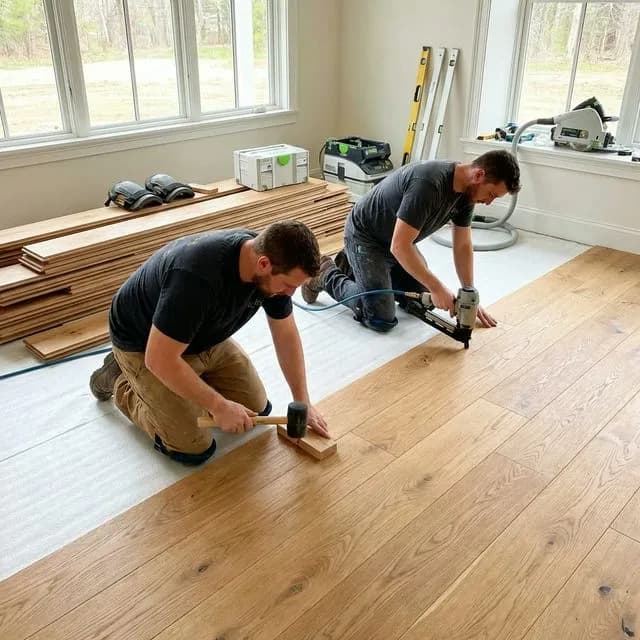
If you've ever stood in a flooring showroom staring at 200 samples and thought "I have no idea which one of these actually works in a kitchen," you're not alone. Kitchens are the single hardest room in the house to choose flooring for, and it's not even close.
We've installed flooring in over 4,000+ homes across the Lehigh Valley and northern New Jersey since 2003. Kitchens make up a huge percentage of that work — and they're also where we see the most regret. Homeowners who picked based on looks alone, who didn't think about what happens when the dishwasher leaks, who didn't realize their beautiful new floor would feel like standing on concrete during a two-hour Thanksgiving cooking marathon.
This guide is what our design consultant Jen Kowalski — CFI certified and the person who walks every single kitchen client through material selection — actually tells people during in-home consultations. No manufacturer talking points. No "it depends." Real recommendations based on thousands of kitchen installations in real PA and NJ homes.
Why Kitchen Flooring Is the Toughest Decision in Your Home
Every room in your house has one or two things that stress your flooring. Bathrooms have moisture. Living rooms have foot traffic. Entryways have dirt and grit. But kitchens? Kitchens have everything.
Water is the obvious one. Your kitchen sink runs multiple times a day. The dishwasher cycles produce steam and occasional leaks. The refrigerator ice maker line is a ticking time bomb — we've pulled up destroyed flooring from ice maker leaks in homes across Allentown, Bethlehem, Easton, and Hackensack more times than we can count. Then there's the everyday splashing: filling pots, rinsing vegetables, kids grabbing water bottles. The area in front of your kitchen sink gets more water exposure than some bathrooms.
But water is just the start. Kitchens also deal with impact. You drop a cast iron skillet, a jar of pasta sauce, a frozen chicken — the floor has to survive that. We replaced a section of laminate in a Phillipsburg kitchen last fall because the homeowner dropped a Le Creuset Dutch oven from counter height. The impact cracked through the decorative layer and into the HDF core. That's a section replacement on a floor that was only two years old.
Then there's comfort. This is the factor that most people underestimate until they're living with their choice. If you cook regularly — and in the Lehigh Valley and northern NJ, where Sunday dinners and holiday cooking are serious business — you're standing in the same spot for 30 to 90 minutes at a time. Your feet, knees, and lower back feel every bit of whatever surface is beneath you. A porcelain tile floor with no cushion underneath is gorgeous, but standing on it for an hour while prepping a holiday meal will make you question every decision you've ever made.
Add in cleaning demands (kitchens get dirty fast), style requirements (the kitchen is the first room guests see in most open-concept PA and NJ homes), temperature (tile is frigid in January), and the fact that kitchens often connect directly to living and dining areas — and you have a flooring decision that touches every single priority at once.
Here's the other thing that makes kitchen flooring tricky in our market specifically. Eastern PA and northern NJ homes span a huge range of styles. We install in 1920s row homes in Easton with 80-square-foot galley kitchens and in 3,500-square-foot new construction in Warren County with open-concept kitchen-living-dining areas covering 600 square feet. The right flooring answer is different for each. A material that works perfectly in a compact townhouse kitchen in Hackensack might be the wrong choice entirely for a sprawling farmhouse kitchen in Hunterdon County.
Our owner Vincent Karaca says the same thing to every new kitchen client: "Pick the floor for how you actually use your kitchen, not for how it photographs." That mindset has guided over a decade of kitchen installations and is the foundation of everything in this guide.
Luxury Vinyl Plank: Our #1 Kitchen Recommendation
If you asked our 35+ installers to vote on the best kitchen flooring, the result would be unanimous. Luxury vinyl plank with a rigid SPC core is the best overall kitchen flooring you can buy in 2026. We've been saying this for years, and the products keep getting better while the arguments against LVP keep getting weaker.
Here's why LVP wins in kitchens, broken down by every factor that matters.
Water Resistance That Actually Holds Up
The rigid SPC core in modern LVP is made from stone plastic composite — it contains zero wood fiber and zero organic material that can absorb water. You could submerge a plank of COREtec Pro Plus in a bucket for a month and it would come out exactly the same. We know this because we've done it as a demonstration for skeptical clients.
In a kitchen context, this means the everyday water exposure around sinks and dishwashers is a non-issue for the material itself. Splashes, steam, spills — the planks do not care. The weak point on any floating LVP installation is the seams. Water can seep between the click-lock joints if it pools and sits for extended periods. That's why installation quality matters so much.
For kitchen installations, our crews take extra steps. We apply a seam sealant along the joints within three feet of the sink, dishwasher, and refrigerator — the three highest-risk water zones. We caulk the perimeter where the LVP meets the base cabinets with a color-matched flexible silicone. And we make sure the expansion gap behind the toe kick is sealed from any water intrusion above. These aren't optional upgrades — they're standard practice on every kitchen LVP installation we do.
A client in Palmer Township had a dishwasher supply line burst while they were at work. Water ran for about four hours before a neighbor noticed. The LVP we'd installed six months earlier was standing in half an inch of water when they got home. We came out the next day, pulled up the planks in the affected area, dried the subfloor with fans for 48 hours, and reinstalled the same planks. Total cost to the homeowner: our labor fee for the half-day visit. The material was completely undamaged. Try that with hardwood or laminate — you'd be looking at a full tear-out and replacement.
Comfort During Long Cooking Sessions
This is where LVP quietly outperforms tile in every kitchen. The SPC core has a slight flex to it compared to porcelain or ceramic, and most premium products include an attached cork or IXPE underlayment that adds cushion. The difference is subtle when you're walking across the room, but after 45 minutes of standing at the counter chopping vegetables, your feet and knees feel it.
We did a side-by-side installation for a client in Bethlehem who was renovating their kitchen and adjoining dining area. They put porcelain tile in the cooking zone and COREtec Plus HD in the eating area. Within a month they called Jen and said they wished they'd done LVP everywhere. The tile was beautiful but their feet ached after cooking dinner every night. They ended up putting anti-fatigue mats in front of the stove and sink, which defeated the whole purpose of spending $14 per square foot on imported Italian porcelain.
Drop Resistance and Impact Performance
LVP is not indestructible, and we'll never claim it is. If you drop a cast iron pan from four feet up, you might dent the surface. But here's the practical difference: on tile, that dropped pan cracks the tile and you need a professional repair. On hardwood, it creates a permanent dent that catches dirt and is visible in certain light forever. On LVP, it might leave a small dent that's barely noticeable — and if it's bad enough, we can replace that single plank in about 15 minutes without touching the rest of the floor.
The repairability factor is huge in kitchens. Things get dropped. A 28-mil wear layer like what you find on COREtec Pro Plus or Shaw Floorte Pro Paragon handles most kitchen impacts without any visible damage. And when something does happen, the click-lock system means individual planks can be swapped out. With tile, a cracked piece requires chiseling it out and hoping the replacement tile matches. With hardwood, a deep dent means sanding and refinishing the entire room.
Style Options That Match PA and NJ Kitchen Designs
The knock on LVP used to be that it "looks fake." That was true ten years ago. It is not true in 2026. The current generation of embossed-in-register (EIR) luxury vinyl is virtually indistinguishable from real hardwood at standing height. We have installed luxury vinyl plank in kitchens next to real hardwood in adjoining rooms and had the homeowners' guests unable to tell which was which.
For the classic PA farmhouse kitchen with white shaker cabinets and subway tile backsplash, a warm white oak LVP in a wire-brushed texture is the most popular choice we install. For more modern NJ kitchens with flat-panel cabinetry and quartz countertops, we see clients leaning toward cool-toned gray oaks and even concrete-look vinyl planks. The Shaw Floorte Pro series alone offers over 40 wood-look colors, and COREtec's lineup has expanded to include European oak visuals that pair beautifully with the Scandinavian-influenced kitchen designs trending in Bergen and Essex County right now.
The Cost Advantage
Quality kitchen LVP runs $5.50 to $8 per square foot for material and $2 to $3.50 per square foot for professional installation, putting the total in the $7.50 to $11.50 range fully installed. For a typical 150-square-foot kitchen, that's $1,125 to $1,725. Compare that to porcelain tile at $8 to $15 installed or engineered hardwood at $9 to $14 installed, and the savings are significant — especially when performance in a kitchen environment is equal or better.
LVP installation is also faster, which matters if your kitchen is out of commission during the project. A typical kitchen LVP install takes our crew one day. Tile can take two to three days with setting and grouting time. Hardwood needs one to two days for installation plus time for acclimation. Less time with your kitchen torn apart means less time eating takeout and less disruption to your family.
Porcelain Tile: The Waterproof Classic
We'll be straight with you: porcelain tile is the most durable kitchen floor you can install. Bar none. If longevity and total waterproofing are your top priorities, and you're willing to trade comfort for indestructibility, tile is the answer.
We install a lot of porcelain tile in kitchens across our service area, and it's been a staple of kitchen design in eastern PA and northern NJ for generations. There's a reason every Italian restaurant kitchen you've ever walked into has tile on the floor — it handles everything.
Truly Waterproof, Seams and All
Unlike LVP, where the seams are the vulnerability, a properly grouted porcelain tile floor is waterproof as a system, not just as individual pieces. When we install tile in a kitchen, we use an epoxy or urethane-modified grout that resists water penetration. The tile itself has a water absorption rate below 0.5% — meaning it's essentially impervious. If your dishwasher floods or a pipe bursts under the sink, a tile floor with properly sealed grout will keep water from reaching the subfloor far better than any other surface.
We did a kitchen tile installation in a 1940s colonial in Easton where the homeowners had experienced two dishwasher leaks in the previous five years, each time destroying the vinyl sheet flooring underneath. They were done taking chances. We installed 12x24 porcelain tile with epoxy grout and a Ditra waterproof membrane underneath. That was three years ago. They have had zero water issues since, and the floor looks as pristine as the day we set it.
Heat, Stain, and Scratch Immunity
You can set a 400-degree baking sheet directly on porcelain tile and nothing happens. You can drag a heavy bar stool across it without a scratch. You can spill red wine, beet juice, turmeric — all the kitchen staining nightmares — and it wipes up without a trace. No other kitchen flooring material can make all three of those claims.
For families who cook seriously — and we have plenty of clients in the Lehigh Valley and Bergen County who do — this resilience is worth the tradeoffs. A client in Paramus who runs a catering business out of her home kitchen told us after two years on porcelain tile that she couldn't imagine any other flooring surviving her daily use. She's dropped sheet pans, spilled marinara, had boiling water splash out of pots, and the floor shows zero evidence of any of it.
The Honest Downsides of Tile in Kitchens
Comfort is the big one. Porcelain tile is hard. Not sort-of hard, not firm — hard. Standing on it for 30 minutes feels fine. Standing on it for 60 minutes starts to bother most people. Standing on it for 90 minutes during holiday meal prep, and your feet, knees, and lower back are talking to you. This is not something you can fully appreciate in a showroom. You have to live with it.
We always tell kitchen tile clients to budget for quality anti-fatigue mats in the primary standing zones — in front of the sink, stove, and main prep area. Good mats run $40 to $80 each, and they make a genuine difference. But that is also an admission that the floor itself isn't comfortable enough to stand on, which some people see as a design compromise.
Cold is the second issue. In a Pennsylvania winter, tile floors are cold. Your socks won't save you. If you have radiant floor heating, tile is actually the best conductor and will feel amazing — warm, even, luxurious. But radiant heat adds $8 to $12 per square foot to the installation. Without it, tile in a Lehigh Valley kitchen from November through March is a cold reality.
Breakage is the third factor. Tile doesn't crack under normal use. But when you drop a glass, a ceramic bowl, or your phone on tile, the item is much more likely to shatter or crack than on LVP or hardwood. And if a heavy object hits the tile just right — a cast iron pan corner-first from counter height — the tile itself can chip or crack. When that happens, the repair involves chiseling out the damaged tile, cleaning the thinset, and setting a new piece. Assuming you still have matching tile available, the repair is doable but not cheap — expect $200 to $400 for a professional tile repair in a kitchen.
Hardwood in Kitchens: Beautiful but Risky
We need to be upfront about something: we love hardwood. Our hardwood installation team is NWFA certified, we've installed hardwood in thousands of homes, and there is nothing that matches the warmth and character of real wood underfoot. But recommending hardwood for a kitchen requires a frank conversation about risk, maintenance, and realistic expectations.
Hardwood in a kitchen is like a luxury sports car as a daily driver. It's beautiful. It makes a statement. It elevates the entire space. But it requires more attention, more care, and more willingness to accept that wear is going to happen. If you're okay with that tradeoff — and many of our clients are — hardwood can be stunning in a kitchen.
Engineered vs. Solid: Only One Option for Kitchens
We do not install solid hardwood in kitchens. Period. Solid hardwood expands and contracts dramatically with humidity changes, and kitchens produce constant moisture fluctuations from cooking, dishwashers, and the sink. We've pulled up buckled solid hardwood from kitchens in older Bethlehem and Allentown homes where the boards had literally lifted off the subfloor from cumulative moisture exposure. The repair cost more than the original installation.
Engineered hardwood is a different story. The cross-layered plywood construction resists expansion and contraction far better than solid wood. A quality engineered product — something with a 4mm or thicker hardwood veneer on top and a seven-to-nine-ply core — handles kitchen humidity swings well. It's not waterproof like LVP, but it tolerates the ambient moisture that kitchens produce.
The Water Risk Zone
The area directly in front of the kitchen sink and around the dishwasher is where hardwood gets into trouble. This zone gets splashed multiple times daily, and over months and years, that repeated water exposure takes a toll. We've seen engineered hardwood develop cupping — where the edges of the planks rise slightly above the center — in the sink zone of kitchens where the homeowners were diligent about wiping up spills. The problem isn't the big spills you notice. It's the tiny drops and splashes that happen every time you wash your hands or rinse a plate. They accumulate.
Our recommendation for hardwood kitchen installations is to use mats or runners in the sink and dishwasher zones. Yes, they cover up some of the beautiful wood. But they protect the most vulnerable areas and extend the life of the finish dramatically. We also apply an extra coat of polyurethane to the planks in the water zone during installation — it adds about $1 per square foot in that area and provides a meaningful extra layer of protection.
Species and Finish Choices That Work in Kitchens
White oak is the best hardwood species for kitchens. Unlike red oak, white oak has a closed cell structure that makes it naturally more water-resistant. Its Janka hardness rating of 1,360 is solid enough to handle kitchen wear. The grain pattern is clean and modern, which is why it's become the overwhelming favorite in kitchen renovations across our PA and NJ service area.
Hickory (Janka 1,820) is another strong kitchen choice — it's harder than oak, and the bold grain pattern hides scratches and dents better. We installed hickory in a large farmhouse kitchen in Warren County last year, and the character of the natural grain variation matched perfectly with the client's rustic cabinetry and soapstone countertops.
For finish, we always recommend satin or matte polyurethane in kitchens. High-gloss finishes show every scratch, water spot, and footprint. A matte or satin finish hides imperfections, gives the kitchen a more natural feel, and beads water more effectively than gloss. Wire-brushed or hand-scraped textures add an extra layer of scratch disguise — the texture masks minor wear so the floor maintains its appearance longer between refinishes.
What About Laminate in the Kitchen?
We're going to give you the straight answer: we do not recommend laminate flooring for kitchens in 2026. There was a time when laminate was a reasonable budget option for kitchens, but that time has passed. Modern LVP has eliminated every advantage laminate used to have while avoiding its critical weakness.
Here's the problem. Laminate has an HDF (high-density fiberboard) core. HDF is made from compressed wood fibers. When it gets wet, it swells. It does not un-swell. Once water penetrates the surface — and in a kitchen environment, it will eventually — the core absorbs moisture and the planks puff up, warp, and separate. We have replaced more laminate kitchen floors in our 13-plus years than any other single material. It is the number one kitchen flooring failure we see.
Some manufacturers now offer "waterproof laminate" products with treated cores and sealed edges. These are better than traditional laminate, but they still contain wood fiber. In our testing and field experience, they resist moisture better than standard laminate but do not match the true waterproof performance of SPC luxury vinyl. When a client asks about waterproof laminate for their kitchen, Jen's response is always the same: "For the same price, I can put you in an LVP that's genuinely waterproof instead of water-resistant. Why take the chance?"
The one scenario where we'll discuss laminate for a kitchen is when a client is on a very strict budget and needs to cover a large area. Entry-level laminate runs $2 to $3.50 per square foot installed, which is less than quality LVP. If the choice is between cheap laminate and leaving a deteriorating floor in place, laminate is the better option. But we make sure the client understands that it's a five-to-seven year floor in a kitchen, not a fifteen-year floor, and that any water incident could shorten that lifespan significantly.
For clients who want the click-lock floating installation that laminate is known for, at a similar or slightly higher price point, we steer them toward entry-level SPC vinyl plank. Products like the LifeProof line or the Shaw Foundation series offer genuine waterproof cores in the $3.50 to $5 per square foot installed range. That modest step up from laminate pricing gives you a dramatically more appropriate kitchen floor.
Kitchen Island and Eat-In Kitchen Considerations
Kitchen islands have gone from a luxury feature to a near-standard in PA and NJ kitchen renovations. And they create specific flooring challenges that most homeowners don't think about until it's too late.
Flooring Under the Island: Do It Right or Pay Later
Rule number one: always install the flooring before the island. Or at minimum, run the flooring under the island's footprint even if the island will cover it. This is especially critical for floating floors like LVP and laminate. A floating floor needs a continuous plane to expand and contract freely. When you cut the floor around the island, you create a rigid anchor point that restricts movement. The result? Buckling, gapping, and click-lock failures.
We got called to a kitchen in Whitehall Township where the original installer had cut the LVP around a large L-shaped island. Within eight months, the planks had buckled in a three-foot radius around the island on the side facing the patio door, where temperature fluctuations were greatest. The homeowner thought the product was defective. It wasn't. It was an installation error. We pulled the entire floor, removed the island with the contractor, reinstalled the LVP correctly underneath, and reset the island. What should have been a $3,500 kitchen floor project turned into a $6,800 headache.
For glue-down installations — whether LVP or engineered hardwood — installing under the island is less structurally critical because glue-down floors don't need the same expansion freedom. But we still recommend it for future flexibility. If you ever want to move, redesign, or remove the island, you'll have finished flooring underneath instead of bare subfloor.
Eat-In Kitchen Zones
Many PA and NJ kitchens include a dining area — whether it's a breakfast nook, an eat-in area with a table, or bar seating at the island. These dining zones get different wear than the cooking zone. Less water exposure, but more chair scuffing from people pushing in and pulling out seats, more food and drink spills at the table, and more visibility since it's where people sit and look at the floor up close.
For eat-in areas, chair leg protection is critical no matter what flooring you choose. Felt pads on all chair and table legs, replaced every six months because they compress and pick up grit that becomes abrasive. For bar stools at an island, look for stools with rubber or felt floor glides — metal bases on any hard flooring will scratch within weeks.
If you're doing different flooring in the cooking and eating zones — which we occasionally recommend for larger kitchens — the transition between materials matters enormously. A poorly placed or cheap-looking transition strip can make a $15,000 kitchen renovation look unfinished. We prefer to transition at a natural architectural line: where the island ends, where a half-wall or column creates a visual break, or where the ceiling height changes. The transition should look like an intentional design element, not a compromise.
Our Top 3 Kitchen Flooring Combinations
After thousands of kitchen installations across the Lehigh Valley and northern New Jersey, these are the three kitchen flooring setups our team installs most often — and the ones that consistently earn the highest satisfaction from our clients.
Combination 1: Full Kitchen LVP (Our Most Popular)
The setup: Premium SPC luxury vinyl plank throughout the entire kitchen, including under the island and into any eat-in area. One material, one visual, zero transitions.
Why it works: This is the setup we install in about 60% of our kitchen projects. It gives you waterproof performance everywhere, consistent comfort whether you're standing at the stove or sitting at the table, and a seamless look that makes the kitchen feel larger. When the kitchen opens directly into a living room or family room — which is the case in most post-2000 construction in our area — we run the same LVP straight through both rooms. No transition strip, no visual break, just one continuous floor that unifies the entire main level.
Best for: Open-concept kitchens, families with kids, homes where the kitchen is the primary gathering space, budget-conscious renovations that still want premium results.
Real example: A family in Forks Township renovated their entire main floor — kitchen, dining room, living room, and hallway — with Shaw Floorte Pro Paragon in Brushed Pine. Total area was about 850 square feet. The seamless look from the front door through to the kitchen window made their standard colonial feel twice its size. Total installed cost was around $7,600, and the project took our crew a day and a half.
Combination 2: Porcelain Tile Kitchen with Hardwood Transition
The setup: Large-format porcelain tile in the kitchen cooking zone, transitioning to engineered hardwood in the adjacent dining and living areas.
Why it works: This is the classic PA and NJ kitchen approach, and it endures because it puts the most durable material where durability matters most and the warmest material where comfort and aesthetics take priority. The tile handles the sink, stove, and dishwasher zone without complaint. The hardwood in the dining and living areas provides warmth underfoot and the richness that only real wood delivers.
The key detail: The transition between tile and hardwood has to be handled perfectly. We use a custom flush-mount transition piece — not the cheap metal strips from the hardware store — that sits level with both surfaces. When both floors are at the same height (which we engineer during subfloor prep), the transition is a subtle line rather than a trip hazard or visual eyesore. We stock transitions in every major wood tone to match the hardwood side.
Best for: Traditional and transitional kitchen designs, serious cooks who want maximum durability in the work zone, homes with defined room separations rather than fully open concepts.
Real example: A couple in Hackensack renovated their galley kitchen and connected dining room. We installed 12x24 Italian porcelain in a warm travertine look throughout the 120-square-foot kitchen, with a flush transition to 5-inch white oak engineered hardwood in the dining room. The porcelain picked up the warm cream tones of their new cabinetry, and the white oak complemented their mid-century dining furniture. The transition at the doorway looked like it had always been there. Installed cost for both rooms was about $5,800.
Combination 3: LVP Kitchen with Hardwood in Living Areas
The setup: Wood-look luxury vinyl plank in the kitchen and any wet areas, real engineered hardwood in the living room, dining room, and bedrooms.
Why it works: This gives you genuine hardwood where you want the real thing and waterproof performance where you need it. The trick is matching the LVP to the hardwood closely enough that the transition is almost invisible. This is one of Jen's specialties — she spends significant time during consultations pairing LVP colors and textures with specific hardwood species and stains so the two materials look like they belong together.
Best for: Homeowners who want real hardwood in their living spaces but recognize the risk of wood in the kitchen, homes with clearly defined transitions between kitchen and living areas, mid-to-upper budget renovations.
Real example: A homeowner in Bethlehem was renovating a 1950s cape cod and wanted white oak hardwood throughout the main level. During the consultation, Jen showed them a COREtec Pro Plus color that was a near-perfect match for the 5-inch white oak engineered plank they had selected for the living room. They installed the LVP in the 180-square-foot kitchen and the hardwood in the remaining 650 square feet of the main floor. With a slim T-molding transition at the kitchen entry, the two materials read as one continuous floor unless you got down on your hands and knees to inspect. The homeowner's total savings compared to hardwood everywhere was about $1,800, and they got a kitchen floor they never have to worry about around water.
Making Your Decision: The Questions That Matter
After reading all of this, you might still feel unsure. That's normal. Kitchen flooring involves more variables than any other room. Here are the questions Jen asks every kitchen client during the initial consultation to narrow down the right answer:
- How often do you cook, and for how long? If you cook daily and frequently spend 30-plus minutes on your feet, comfort underfoot should be weighted heavily. That tilts toward LVP.
- Do you have kids or pets? Both increase water exposure and impact risk, making LVP or tile the safer choices over hardwood.
- What flooring is in the rooms adjacent to your kitchen? If the kitchen connects to other rooms visually, the floor needs to complement or match what's next door. Sometimes that dictates the material choice.
- How old are your appliances? An older dishwasher or a refrigerator with an ice maker line over five years old increases leak risk. If a major appliance failure could flood your kitchen, waterproof flooring is essential.
- What's your kitchen style? Modern kitchens with clean lines work beautifully with large-format tile or cool-toned LVP. Farmhouse and traditional kitchens pair naturally with warm-toned LVP or engineered hardwood. The cabinetry, countertop, and backsplash should all inform the floor choice — not the other way around.
- What's your realistic maintenance tolerance? If you want a floor you can ignore for 15 years, choose LVP or tile. If you're willing to refinish every five to seven years and place mats in water zones, hardwood is on the table.
Every kitchen project at VM Power Flooring starts with a free in-home consultation where Jen or one of our team members assesses your kitchen layout, measures the space, discusses your priorities, and shows you samples in your actual lighting with your actual cabinetry. That consultation is the single best thing you can do before committing to a material. A sample that looks perfect under showroom lighting can look completely different under the pendant lights in your kitchen.
We've been doing this across eastern PA and northern New Jersey since 2003 — over 4,000+ projects with a team of 35+ NWFA and CFI certified professionals. The people who consult with you on material selection are the same people who oversee your installation. That continuity matters, especially in a kitchen where every detail — from subfloor prep to transitions to cabinet toe kick sealing — affects the final result.
Ready to figure out the right kitchen floor for your home? Contact us for a free estimate or use our online cost calculator to get a ballpark number before we visit. Whether you're renovating a compact galley kitchen in Allentown or building out a chef's kitchen in Ridgewood, we've done the project and we can help you get it right the first time.
Explore Our Related Services
About the Author
Design Consultant
Certified: CFI
Jen handles in-home consultations and helps homeowners pick the right floor for their space, budget, and lifestyle. She came from the interior design side — seven years at a kitchen-and-bath firm in B...
You Might Also Like
Best Flooring Options for Kitchens, Bathrooms & Basements
We've pulled up enough warped hardwood and moldy carpet from basements to know exactly which flooring belongs in wet are...
Read: Best Flooring Options for Kitchens, Bath… ComparisonHardwood vs. Luxury Vinyl Plank: Which Is Better for Your Home?
After installing thousands of floors across the Lehigh Valley and northern New Jersey, here's what we actually tell home...
Read: Hardwood vs. Luxury Vinyl Plank: Which I… Cost GuideHow Much Does Flooring Installation Cost in 2026? Complete Price Guide
Tired of vague price ranges from sites that have never swung a hammer? Here are real, local flooring costs pulled from p...
Read: How Much Does Flooring Installation Cost…