Jen Kowalski
Design Consultant
Top Flooring Trends for 2026: What Homeowners Are Choosing
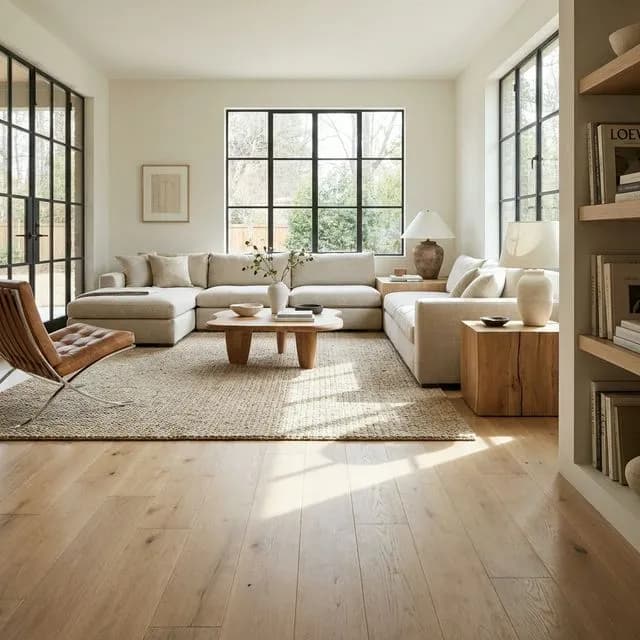
We install flooring six days a week across the Lehigh Valley andnorthern New Jersey. That means we get to see what real homeowners are actually picking — not what Pinterest says they should pick. And after thousands of installs, we can tell you with confidence: 2026 looks different from even two years ago.
Some of these shifts have been slow burns. Others happened fast. Either way, if you're planning a flooring project this year, you should know what's moving and what's fading before you commit. Here's what we're seeing on the ground — literally.
How We Track Trends (Hint: Not From Social Media)
Let's be real — most "trend" articles are written by people who have never ripped out a floor. They scroll Instagram, grab some keywords, and call it a day. We do things differently.
Our data comes from three places. First, our own install records. We track every product, every color, every pattern across every job. Second, our suppliers. We talk to distributors in Allentown and across Bergen County weekly, and they tell us what's moving off warehouse shelves. Third, the designers and builders we work with. When an architect in Easton starts specifying a new product, we hear about it before it hits any magazine.
That combination gives us a picture that's grounded in what people are actually buying — not what looks good in a staged photo. So when we say something is trending, we mean we are physically installing it in homes right now.
Wide Plank Everything — 7 Inches Is the New Minimum
Three years ago, a 5-inch plank was standard. Now? Customers walk into our showroom and start at 7 inches. Many go to 8 or 9. We had a homeowner in Bethlehem last month request 10-inch white oak planks for their entire first floor. That would have been unusual in 2023. In 2026 it barely raises an eyebrow.
Wide planks do a few things well. They make rooms feel bigger. They show off the wood grain in a way narrow strips just can't. And they look more modern without trying too hard. The trade-off is cost — wider planks require wider boards, which means more selective sourcing and higher material prices. Expect to pay 15 to 25 percent more for a 9-inch plank versus a 5-inch plank of the same species and grade.
Here's the thing: this isn't just a hardwood trend. LVP manufacturers have followed. Brands like COREtec and Mohawk now offer wide-format planks that mimic the proportions of real wood. If you're comparing hardwood versus LVP, plank width is something to pay attention to in both categories.
Installation with wide planks is a bit different too. The subfloor needs to be flatter because any imperfection telegraphs more on a wide board. Our crew spends more time on prep for wide-plank jobs, and it's worth every minute. A wavy wide-plank floor looks worse than a wavy narrow-plank floor. No shortcuts here.
- Most requested widths: 7-inch and 8-inch planks for both hardwood and LVP
- Premium picks: 9- to 11-inch European oak, usually engineered
- Budget-friendly option: Wide-format LVP at 7 to 9 inches, starting around $3.50 per square foot for the material
Matte and Natural Finishes Are Winning
The glossy, shiny floor is over. We said it. High-gloss finishes show every scratch, every dust particle, every footprint. Homeowners got tired of it, and honestly, so did we.
What's replaced it is a matte or satin finish that makes wood look like wood. Not like a bowling alley. The best-selling finish in our showroom right now is a natural matte oil — it soaks into the grain instead of sitting on top like a plastic coating. You can feel the texture of the wood under your feet. It's the way floors looked a hundred years ago, just with modern durability.
Wire-brushed textures are big too. The subtle grooves hide minor wear and give the floor personality. We installed wire-brushed white oak in a farmhouse in Nazareth last fall and the homeowner said it looked like it had been there for decades. That was the whole point.
"We switched our finish recommendations about two years ago. Almost every customer who sees a matte sample next to a glossy one picks matte immediately. It's not even close anymore."
If you already have hardwood floors with a glossy finish, refinishing them with a matte or satin polyurethane is one of the fastest ways to update the look of your home. Check out our hardwood maintenance guide for tips on keeping any finish looking its best long-term.
Light Oak Has Replaced Gray
Gray floors are done. We said it.
Look, gray had a good run. From about 2016 to 2022, gray-washed hardwood and gray-toned LVP were everywhere. Every flip, every new build, every HGTV episode. But here's what happens with any trend that gets overdone — people start associating it with "dated" instead of "modern." That's where gray is now.
The replacement? Light, natural oak tones. Think honey. Think wheat. Think the color wood actually is when you don't stain the life out of it. We've installed more white oak in the last 6 months than in all of 2024 combined. Natural white oak with a clear matte finish is the single most requested floor in our business right now.
This shift makes sense when you think about it. Warm tones work with more design styles. They pair well with the warm whites, greens, and earth tones that are taking over wall colors. And they age gracefully — natural oak gets a richer patina over time instead of looking washed out.
Some of the medium-brown tones are gaining ground too. Not the dark espresso stains from the 2010s, but a middle-ground brown that feels warm without going dark. A designer in Morristown told us she's specifying what she calls "warm walnut" tones for about half her projects now. We're seeing the same thing on our end.
The "Waterproof or Nothing" Mindset
Something shifted in the last couple of years, and now almost every customer asks the same question before anything else: "Is it waterproof?"
We get it. Nobody wants to rip out a floor because their dishwasher leaked or their kid left the bath running. That fear is real, and it's pushing people toward luxury vinyl plank for kitchens, bathrooms, basements, and laundry rooms at a rate we've never seen before.
The quality of waterproof LVP in 2026 is genuinely impressive. The top-tier products have rigid cores, realistic textures, and attached underlayment. They click together tight enough that standing water won't penetrate the seams for 24 to 72 hours depending on the brand. That's more than enough time to catch a leak.
But here's a nuance that gets lost: waterproof does not mean water-damage-proof. If water gets under LVP through an edge or a gap and sits on your subfloor, you still have a problem. The plank itself survives, but the subfloor might not. We always recommend proper moisture barriers and correct transitions at doorways, especially in basements. For more on costs and what to expect, see our flooring installation cost guide.
Engineered hardwood has gotten better with water resistance too. Some manufacturers are using waterproof cores and sealed edges. It's not the same as LVP — you still wouldn't put engineered hardwood in a bathroom — but it handles kitchen spills far better than solid hardwood does.
- Best for wet areas: Luxury vinyl plank with a rigid core
- Good middle ground: Waterproof-core engineered hardwood for kitchens and dining areas
- Skip for wet rooms: Solid hardwood and standard laminate — they cannot handle repeated moisture exposure
Sustainable Materials Are No Longer Niche
Five years ago, asking about sustainable flooring meant you were shopping at a specialty store and paying a premium. That's changed. Sustainability has gone mainstream, and the products have gotten better and more affordable in the process.
Bamboo flooring has come a long way. The strand-woven bamboo we install now is harder than most hardwoods — it scores above 3,000 on the Janka hardness scale, compared to about 1,300 for red oak. It grows back in 5 years versus 50+ for a hardwood tree. And it looks great. We did a whole house in Allentown with carbonized bamboo last year and it turned out beautiful.
Reclaimed wood is another area that's picked up. People want the character of old barn wood or salvaged factory flooring. It's not cheap — sourcing, milling, and prepping reclaimed wood takes real labor — but the result is one-of-a-kind. You cannot fake 150 years of patina.
Even LVP is getting greener. Several manufacturers now use recycled materials in their cores and offer take-back programs at end of life. It's not perfect — vinyl is still vinyl — but the industry is moving in the right direction. We've noticed more homeowners in both PA and NJ asking specifically about environmental certifications like FloorScore and GreenGuard.
Cork is making a quiet comeback too. It's warm, soft underfoot, naturally antimicrobial, and harvested without cutting down the tree. It's not right for every room — it dents more easily than hardwood — but for bedrooms and home offices, cork is a genuinely appealing choice.
Herringbone and Chevron Are Back
Pattern floors are having a real moment. Herringbone and chevron layouts, which dominated European homes for centuries, have come roaring back in the US market. And not just in hardwood — we're seeing them in LVP and even laminate.
A designer in Morristown specified herringbone LVP for a client last month — something we never saw 3 years ago. The product quality has caught up to the point where pattern installs in vinyl actually look convincing. The planks are precision-cut and the patterns lock together cleanly.
We should be upfront about the cost though. A herringbone or chevron install takes more time, more skill, and more material than a standard stagger layout. Plan on 20 to 40 percent more for labor, plus extra material for the angled cuts. On a 1,000-square-foot project, that adds up fast. But the impact is undeniable. A herringbone floor turns a regular room into something special.
"We tell customers: if you're going to do herringbone, do it in a space where people will actually see it. An entryway, a living room, a kitchen. Don't spend the premium on a hallway nobody notices."
Chevron is slightly more expensive than herringbone because each plank needs to be cut at an angle on both ends, while herringbone uses rectangular planks arranged at 90-degree angles. The visual difference is subtle but real — chevron creates a continuous V-shape, while herringbone has a broken zigzag. Both look incredible in person.
For hardwood pattern installs, we recommend engineered wood over solid. Engineered planks are more dimensionally stable, which matters a lot when every joint angle needs to stay tight. Solid wood expands and contracts more with humidity changes, and in a pattern layout, even small movement becomes visible.
What's Actually Trending in Lehigh Valley vs. North Jersey
We work both markets, and while the broad trends overlap, there are real differences in what sells where. It comes down to housing stock, buyer demographics, and local design culture.
Lehigh Valley (Allentown, Bethlehem, Easton, Nazareth)
The Lehigh Valley market skews practical. People here want durable, good-looking floors at a fair price. Engineered hardwood and mid-range LVP are the top sellers. There's a ton of new construction in the area — subdivisions going up around Bethlehem and south of Easton — and builders are almost exclusively specifying LVP or engineered hardwood. Solid hardwood in new builds has basically disappeared from the spec sheets.
We also see more whole-house flooring projects in the Lehigh Valley. Families buying a home in Nazareth or Lower Macungie are replacing all the flooring at once rather than doing room by room. That pushes them toward consistent products that work everywhere — which usually means LVP on the main floor, carpet in bedrooms, and tile in bathrooms.
North Jersey (Bergen County, Morristown, Surrounding Areas)
North Jersey is a different animal. Budgets tend to be higher. Design expectations are sharper. We see more requests for European oak, herringbone patterns, and premium finishes. A kitchen in Bergen County might get wide-plank French oak with a natural oil finish, while a similar kitchen in Allentown gets engineered white oak with a matte poly. Both look great, but the price points are different.
The renovation market in North Jersey is also stronger relative to new construction. Many homes are older — 1950s splits, 1970s colonials — and homeowners are updating them with modern flooring choices. We do a lot of tear-out-and-replace work in Morristown and surrounding towns where people are pulling up old carpet and sheet vinyl and putting down hardwood or premium LVP.
One thing both markets agree on: carpet on main living floors is basically gone. We still install carpet in bedrooms and basements, but the days of wall-to-wall carpet in a living room or dining room are over in both PA and NJ. That shift is probably permanent.
Frequently Asked Questions
What is the most popular flooring in 2026?
White oak hardwood in wide plank formats with matte or natural finishes is far and away the most requested flooring we see in both PA and NJ. Luxury vinyl plank with a realistic wood look is a close second, especially for basements, kitchens, and bathrooms where water resistance matters.
Are gray floors still in style?
Gray-toned floors have dropped off dramatically since 2024. Most homeowners and designers are now choosing warm, natural tones — light oaks, honey blondes, and warm browns. If you have gray floors they still look fine, but it is no longer what people are selecting for new installs or refinishing projects.
Is LVP better than hardwood in 2026?
Neither is universally better — it depends on the room and your priorities. Hardwood adds more resale value and has a feel underfoot that LVP can't match. LVP wins on water resistance, price, and versatility. Many of our customers combine both: hardwood on main living areas and LVP in basements, laundry rooms, and bathrooms. Read our full hardwood vs. LVP comparison for a deeper breakdown.
How wide should hardwood planks be?
The standard has shifted to 7 inches as the starting point for most installations. We regularly install 8- and 9-inch planks, and some homeowners go as wide as 10 or 11 inches for a more dramatic look. Narrower planks (3 to 5 inches) are mostly seen in older homes or very traditional styles.
Is herringbone flooring more expensive to install?
Yes. Herringbone and chevron patterns typically add 20 to 40 percent to installation labor costs compared to a standard straight-lay pattern. The material itself may also cost more because you need extra for the angled cuts and waste. That said, the finished look is striking and can seriously increase the perceived value of a room. See our installation cost guide for detailed pricing.
What flooring trends are specific to the Lehigh Valley and North Jersey?
In the Lehigh Valley, we see strong demand for engineered hardwood and LVP in new construction, especially in developments around Bethlehem and Easton. North Jersey leans harder into design-forward choices — herringbone patterns, European oak, and high-end LVP brands. Both markets have moved away from carpet on main floors almost entirely. Ready to start your project? Reach out for a free estimate.
Explore Our Related Services
About the Author
Design Consultant
Certified: CFI
Jen handles in-home consultations and helps homeowners pick the right floor for their space, budget, and lifestyle. She came from the interior design side — seven years at a kitchen-and-bath firm in B...
You Might Also Like
Hardwood vs. Luxury Vinyl Plank: Which Is Better for Your Home?
After installing thousands of floors across the Lehigh Valley and northern New Jersey, here's what we actually tell home...
Read: Hardwood vs. Luxury Vinyl Plank: Which I… Cost GuideHow Much Does Flooring Installation Cost in 2026? Complete Price Guide
Tired of vague price ranges from sites that have never swung a hammer? Here are real, local flooring costs pulled from p...
Read: How Much Does Flooring Installation Cost… MaintenanceHow to Maintain and Protect Your Hardwood Floors
Most hardwood damage we see isn't from age — it's from bad cleaning habits and ignored humidity. Here's the exact care r...
Read: How to Maintain and Protect Your Hardwoo…