Danny Reyes
Lead Installer — Hardwood Specialist
Best Flooring Options for Kitchens, Bathrooms & Basements
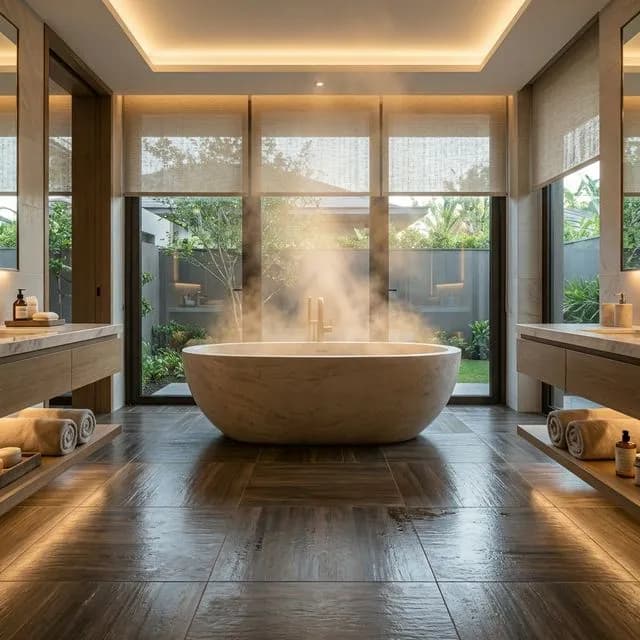
We install flooring every single day across the Lehigh Valley andnorthern New Jersey. And the number one thing that ruins a floor — more than foot traffic, more than pets, more than kids dragging furniture — is water.
It's not even close.
Moisture kills floors slowly and quietly. By the time you notice the warping, the cupping, the musty smell — the damage is already done. We get calls every month from homeowners in Allentown, Bethlehem, Easton, and across Bergen County who made one bad flooring choice in a wet room and are now paying for a full tear-out and replacement.
This post is everything we've learned from 15+ years of installing flooring in kitchens, bathrooms, and basements. No fluff. Just what works, what doesn't, and what we'd put in our own homes.
Why Moisture Destroys Most Flooring (The Science)
Here's the thing most people don't realize: wood is a sponge. Solid hardwood, engineered hardwood, even bamboo — they all absorb moisture from the air and from below. When they absorb water, they expand. When they dry out, they contract. Do that enough times and you get gaps, cupping, buckling, and eventually total failure.
But it's not just wood. Laminate has an HDF (high-density fiberboard) core that swells when it gets wet. Carpet traps moisture underneath and becomes a breeding ground for mold. Even some cheaper vinyl products have a calcium carbonate core that can be affected by extreme moisture over time.
In our part of the country, basements are a whole separate problem. Eastern PA and northern NJ sit on a mix of limestone, shale, and clay soils. Water tables shift seasonally. We've tested concrete slabs inBucks County that read 90% relative humidity — and the homeowner had no idea there was a moisture issue. They just thought their carpet "smelled a little off."
That "little off" smell? That was mold.
The point is this: if you're picking flooring for any room where water shows up regularly — whether it's splashing, condensation, humidity, or slab moisture — you need a product designed to handle it. Not a product that "should be fine" or one a salesperson told you was "pretty water-resistant." You need something that's proven.
Kitchen Flooring: Our Top 3 Picks
Kitchens are interesting because they're not "wet rooms" in the traditional sense. You're not standing in water. But you are dealing with constant spills, splashes from the sink, steam from cooking, and the occasional dishwasher leak that doesn't get noticed for two days.
We've installed thousands of kitchen floors. Here's what holds up best:
1. Luxury Vinyl Plank (LVP) — Our #1 Recommendation
This is what we install in most kitchens across our service area, and it's what we have in our own kitchens too. A quality LVP with a rigid SPC core handles water, drops, scratches, and heavy foot traffic without flinching. It looks like real wood. It feels warm underfoot. And when your kid knocks over a full glass of juice, you just wipe it up and move on.
We typically recommend COREtec Pro Plus or Shaw Floorté Elite for kitchens. Both have thick wear layers (20 mil+), attached underlayment, and genuinely realistic wood visuals. A homeowner in Morristown had us install COREtec in their entire kitchen and dining area last spring — they'd been going back and forth between hardwood and LVP for months. Six months later, they told us it was the best decision they made during their renovation.
Cost-wise, LVP is usually $5–$10 per square foot installed, depending on the product. That's significantly less than hardwood or tile. Check out our cost calculator for a ballpark on your specific project.
2. Porcelain Tile
Tile is bulletproof in kitchens. Water, heat, dropped pans — it doesn't care. The reason it's not our #1 pick is comfort. Tile is hard and cold underfoot. If you're standing in the kitchen for an hour cooking dinner, you'll feel it in your feet and back. Some people love it, especially with radiant floor heating underneath. But most families with kids prefer something a bit softer.
That said, we install a lot of large-format porcelain tile (24x24 or 12x48 planks) in modern kitchens across the Lehigh Valley. The big tiles mean fewer grout lines, and the wood-look porcelain planks are honestly stunning. If you go this route, spend the money on rectified tile and epoxy grout — it'll save you headaches down the road.
3. Engineered Hardwood (With a Caveat)
We know, we just spent a whole section talking about how moisture kills wood. And that's true. But a good engineered hardwood with a plywood core (not HDF) can handle normal kitchen moisture just fine. The key word is normal.
Normal means wiping up spills within a few minutes. Normal means a working range hood that vents outside. Normal does not mean a leaky dishwasher dripping for a week while you're on vacation.
If you're set on the look and feel of real wood in your kitchen, we recommend engineered products from Mohawk or Mannington with at least a 5-ply construction. Apply a quality polyurethane finish and keep up with maintenance. Read our hardwood vs. LVP comparison for a deeper dive on the pros and cons.
Bottom line for kitchens: LVP gives you 90% of the look of hardwood with none of the water anxiety. For most families, it's the smartest pick.
Bathroom Flooring: What Survives Daily Soaking
Bathrooms are the highest-moisture room in your house. Full stop. Steam showers, bath splashing, toilet condensation in summer, wet feet on the floor after every shower — it's a brutal environment for flooring.
We've been in bathrooms across Hackensack, Allentown, and everywhere in between where the wrong flooring turned into a genuine health hazard. Mold growing under vinyl sheet flooring. Laminate swelling so badly the boards were popping up. We once pulled up peel-and-stick tiles in a Bethlehem rowhouse and found black mold covering the entire subfloor. The homeowner had been breathing that in for who knows how long.
Porcelain Tile — The Gold Standard
For bathrooms, porcelain tile is king. We don't care what trends come and go — tile has been the best bathroom flooring for literally thousands of years, and nothing has topped it.
Porcelain is fired at extremely high temperatures, which makes it nearly impervious to water absorption (less than 0.5%). It doesn't swell, it doesn't warp, it doesn't grow mold. With proper installation over a waterproof membrane (we use Schluter DITRA or RedGard on every bathroom job), water literally cannot get to the subfloor.
- Master bathrooms: We love large-format marble-look porcelain (Daltile Perpetuo or Florida Tile Sequence). Minimal grout lines, clean look.
- Kids' bathrooms: Smaller mosaic or hexagon tiles with more grout lines = more grip for wet feet. Safety matters.
- Half baths/powder rooms: This is your chance to get creative. Bold patterns, encaustic-look tiles, color. It's a low-moisture space so you have more flexibility.
Luxury Vinyl (Glue-Down) — The Budget-Friendly Alternative
We'll install LVP in bathrooms, but we strongly prefer glue-down over floating in this application. Why? Floating LVP has seams that aren't sealed. In a bathroom, water will eventually work its way between planks and sit underneath. Glue-down LVP creates a tighter seal and leaves less room for moisture to get trapped.
If budget is a concern, a glue-down luxury vinyl from Karndean or Armstrong will give you a beautiful, waterproof bathroom floor at a fraction of tile cost. See our luxury vinyl installation services.
Basement Flooring: The Biggest Challenge in PA & NJ
Basements in our region are a different animal. We're not dealing with a little splash from the sink here. We're dealing with hydrostatic pressure pushing moisture through concrete slabs, seasonal water table fluctuations, occasional flooding from heavy rain, and humidity levels that can hit 70–80% in July and August.
We once ripped up hardwood in a Bethlehem basement that had been down 3 years — the mold underneath was unreal. The homeowner had finished the basement as a family room and put down solid oak because they "wanted it to feel like the rest of the house." It felt like the rest of the house for about 18 months. Then it started smelling. Then the boards started cupping. By the time they called us, there was active mold growth covering about 60% of the subfloor.
That job cost them three times what the original flooring cost. Don't be that homeowner.
What We Actually Install in Basements
Luxury vinyl plank (floating, with built-in underlayment) — This is our go-to for finished basements that are relatively dry. We test the slab first. If moisture readings are within acceptable range, an SPC-core LVP with a pre-attached pad goes down fast, looks great, and handles the occasional moisture spike without issue. If you do get water, you can pull it up, dry things out, and put it back.
Porcelain tile over a waterproof membrane — For basements with known moisture issues or a history of water intrusion. We'll lay down Schluter DITRA, set the tile, and grout with epoxy. It's more expensive up front, but it's essentially permanent. We've installed this in dozens of basements across Easton, Allentown, and Bergen County.
Epoxy-coated concrete — For utility basements, workshops, and gyms. Not the prettiest option, but it's totally waterproof, easy to clean, and practically indestructible. A lot of our customers in Bucks County have been going this route for basement gyms, and it works perfectly.
Real talk: Before you pick any basement flooring, get the moisture situation handled first. If you have active water intrusion, no flooring product will save you. Fix the drainage, install a sump pump if needed, and get the slab properly sealed. Then call us for flooring.
Basement Subfloor Systems — Worth the Money?
Some companies will try to sell you a raised subfloor system like DRIcore or similar products. These are dimpled panels that create an air gap between the concrete slab and your flooring. Are they worth it?
Honestly, sometimes yes, sometimes no.
If your slab is in decent shape and moisture readings are moderate, the built-in underlayment on a good LVP plank does the same job for less money. But if your slab is rough, uneven, or consistently damp, a subfloor system can be a smart investment. It insulates the floor (makes it warmer underfoot), creates a thermal break, and gives minor moisture a place to evaporate without contacting your flooring.
We evaluate every basement individually. There's no one-size-fits-all answer. Reach out to us through our contact page and we'll come take a look.
The Flooring We Refuse to Install in Wet Areas
We're going to be blunt here. There are certain flooring products we will flat-out refuse to install in wet areas. It doesn't matter how much a customer wants it. We won't do it. Our reputation matters more than a single job.
Solid Hardwood in Basements — Absolutely Not
We flat-out refuse to install hardwood in basements. Period. We've seen too many disasters. We've cleaned up too many mold situations. We've watched too many homeowners spend $8,000 on a beautiful oak floor only to tear it out two years later. The below-grade environment in our region is just too unpredictable for solid wood.
Carpet in Basements or Bathrooms
A family in Hackensack had carpet in their basement for 8 years. When we pulled it up, the pad underneath was black. Not dark gray — black. The smell hit us before we even got the first section rolled back. They had two young kids playing on that carpet regularly.
Carpet holds moisture like nothing else. In a basement, moisture vapor constantly rises through the slab and gets trapped in the carpet pad. You can't see it, you can't always smell it, but it's happening. And mold grows in that environment incredibly fast.
Same goes for bathrooms. Carpet around a toilet or bathtub is a nightmare from both a moisture and hygiene standpoint. If you have carpet in your bathroom right now, please get it out. We're not being dramatic — it's a health concern.
Laminate in Any Wet Area
Laminate looks nice, it's affordable, and it's easy to install. But the core is made from wood fibers pressed together (HDF). Get that core wet and it swells irreversibly. There's no drying it out, no fixing it. Once laminate swells, you're replacing it.
We've seen homeowners confused because their laminate says "water-resistant" on the box. Water-resistant means the surface coating repels water. It does not mean the core won't absorb water that gets through the seams or edges. Don't fall for it.
Our Go-To Combination for Whole-Home Projects
A lot of our jobs aren't single-room projects. Homeowners across the Lehigh Valley and northern NJ are doing full renovations — and they want a cohesive look that flows through the whole house without putting the wrong product in the wrong room.
Here's the combination we recommend most often:
- Living areas, hallways, and bedrooms: Engineered hardwood or premium LVP — your choice depending on budget and preference. If you go LVP, pick one with a realistic texture and long plank format. If you go engineered hardwood, choose something with a wire-brushed or hand-scraped finish that hides wear.
- Kitchen: Same LVP that you use in the living area, or engineered hardwood if you're careful about moisture.
- Bathrooms: Porcelain tile. Pick a tile that complements your main floor color. A warm gray LVP in the hallway with a warm gray marble-look tile in the bathroom — that transition looks intentional and polished.
- Basement: LVP (can be the same product as upstairs or a more budget-friendly option since it's a basement). Or tile if moisture is a concern.
- Laundry room: LVP or tile. Never carpet, never laminate.
The key to making this work is color coordination. You don't need the same flooring everywhere, but you need a consistent palette. Warm tones throughout, or cool tones throughout. Mixing warm oak in the living room with cool gray tile in the bathroom and a reddish LVP in the basement looks chaotic. Pick a lane.
For more on what's trending in flooring design right now, check out our 2026 flooring trends guide.
Our advice for whole-home projects: Start with the room you care most about and build outward. Most people start with the living area or kitchen, pick their dream floor, and then find complementary products for the wet rooms. That approach almost always produces a better result than trying to find one product that "works everywhere."
Transition Strips: The Small Detail That Matters
When you're using different flooring in different rooms, the transitions matter. A cheap metal T-molding between your hardwood hallway and tile bathroom screams "budget job." We use color-matched transitions, and wherever possible, we'll do a flush transition where the two floors meet at exactly the same height. It costs a little more in labor, but the difference in how the finished product looks is night and day.
This is one of those details that separates a professional installation from a DIY weekend project. Our tile installation service covers everything including transitions, thresholds, and edge details.
Frequently Asked Questions
Can I put hardwood floors in my bathroom?
Technically yes, but we strongly advise against it. Even engineered hardwood will eventually warp and cup from the daily moisture exposure in a bathroom. We've pulled up plenty of bathroom hardwood that looked great for a year and then fell apart. Porcelain tile or luxury vinyl plank are much better choices — they'll look just as good and actually last.
What's the best flooring for a basement that floods occasionally?
If your basement has any history of water intrusion, porcelain tile with a proper moisture barrier is the safest bet. Luxury vinyl plank (floating installation) is a close second because it won't absorb water and can be pulled up and reinstalled if you ever get a serious flood. Whatever you do, avoid carpet and solid hardwood — both will be destroyed.
Is luxury vinyl plank really waterproof?
The planks themselves are 100% waterproof — you could soak one in a bucket for a week and it wouldn't swell or warp. The catch is the seams. On a floating LVP floor, water can seep between planks and get trapped underneath if it sits long enough. That's why we always recommend a quality underlayment with a moisture barrier, and we suggest wiping up standing water quickly. For bathrooms, we prefer glue-down LVP or tile for a fully sealed surface.
How much does it cost to install waterproof flooring?
It depends on the material. Porcelain tile runs about $8–$15 per square foot installed in our service area. Luxury vinyl plank is typically $5–$10 per square foot installed. Polished concrete or epoxy for basements runs $4–$8 per square foot. We always include a free estimate — you can use our cost calculator or contact us directly for an accurate quote for your project.
Do I need a moisture barrier under my flooring?
In kitchens, basements, and ground-level rooms — absolutely. In our area of eastern PA and northern NJ, basements are especially prone to moisture vapor rising through the concrete slab. We test every slab with a moisture meter before installation. If the readings are high, we'll install a vapor barrier or recommend a product with a built-in moisture barrier before laying anything down.
What flooring works best if I have radiant floor heating in my bathroom?
Porcelain and ceramic tile are the best conductors for radiant heat — they transfer warmth efficiently and won't be damaged by the temperature changes. Luxury vinyl plank also works with most radiant systems, but you need to check the manufacturer's temperature limits (usually around 85°F surface temp). We've installed both over radiant heat in homes across the Lehigh Valley and can help you pick the right product for your setup.
Ready to Get the Right Floor in Every Room?
Choosing flooring for wet areas doesn't have to be stressful. The options are straightforward once you understand what works and what doesn't — and now you do. If you're in the Lehigh Valley, Bucks County, Bergen County, or anywhere in our PA/NJ service area, we'd love to help you get this right.
Start with a free estimate using our online cost calculator, or contact our team directly to schedule an in-home consultation. We'll test your moisture levels, look at your subfloor, and give you an honest recommendation — not a sales pitch.
Explore Our Related Services
About the Author
Lead Installer — Hardwood Specialist
Certified: NWFA, EPA RRP
Danny has been with VM Power since 2014 and leads our hardwood division. He specializes in wide-plank installations and custom patterns — herringbone, chevron, borders — the work most crews won't touc...
You Might Also Like
Hardwood vs. Luxury Vinyl Plank: Which Is Better for Your Home?
After installing thousands of floors across the Lehigh Valley and northern New Jersey, here's what we actually tell home...
Read: Hardwood vs. Luxury Vinyl Plank: Which I… Cost GuideHow Much Does Flooring Installation Cost in 2026? Complete Price Guide
Tired of vague price ranges from sites that have never swung a hammer? Here are real, local flooring costs pulled from p...
Read: How Much Does Flooring Installation Cost… TrendsTop Flooring Trends for 2026: What Homeowners Are Choosing
Pinterest boards are one thing. What homeowners actually pick when they're spending real money is another. Here's what w...
Read: Top Flooring Trends for 2026: What Homeo…