Vincent Karaca
Founder & Master Installer
Hardwood Floor Refinishing: When to Sand vs. When to Replace
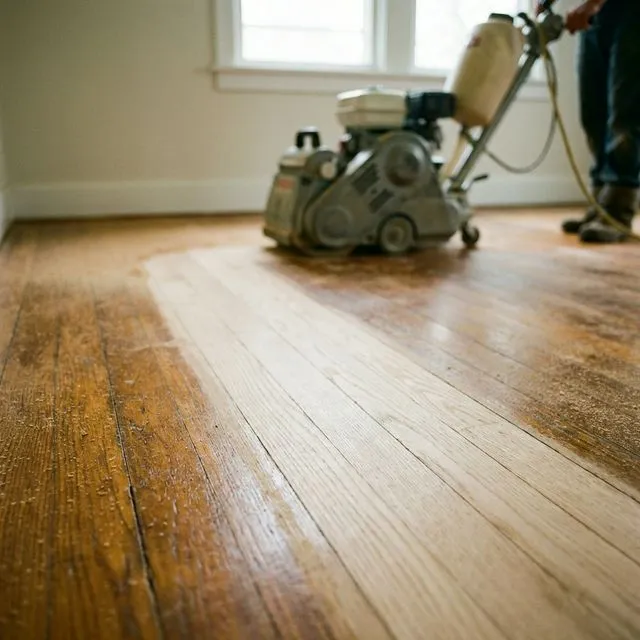
The Question We Get Every Single Week
"Should we refinish these floors or just rip them out and start over?"
We hear this at least two or three times a week. Homeowners staring at scratched-up, dull, worn-out hardwood floors and trying to figure out if there's still life left in them. It's a fair question — and honestly, the answer isn't always obvious.
We've been doing this for over 15 years across the Lehigh Valleyand northern New Jersey, and we've seen it all. Floors that looked terrible but came back to life with a sand and finish. Floors that looked okay on the surface but were hiding serious problems underneath. And plenty of homeowners who got bad advice and spent money they didn't need to.
A couple in Nazareth was ready to tear out their entire first floor — turned out the floors just needed a good sand and three coats of poly. Saved them about $8,000. On the flip side, we've walked into homes in Bethlehem where the wood was so thin from previous sandings that one more pass would have gone right through to the subfloor.
This guide is everything we know about making this decision. No sales pitch, no fluff — just the stuff we actually tell people when we're standing in their living room looking at their floors.
If you want to understand the full picture on what flooring projects cost, check out our flooring installation cost guide for 2026. And if you're already leaning toward refinishing, our refinishing services page has the details on what we offer and how we work.
Signs Your Floors Just Need a Refinish
Let's start with the good news. A lot of floors that look rough are actually in great shape structurally. They just need some TLC. Here are the signs that a refinish is all you need:
- Surface scratches and scuff marks. If the scratches are in the finish and not gouged deep into the wood, sanding and recoating will take care of them completely. Pet scratches, furniture drag marks, high-traffic wear patterns — these are all surface-level problems.
- Dull, faded, or worn-looking finish. Polyurethane breaks down over time, especially in areas that get a lot of sunlight. When the finish is gone but the wood underneath is solid, you're looking at a straightforward refinish job.
- Minor color inconsistencies. Had an area rug down for 10 years and now there's a noticeable color difference? Sanding evens everything out and you can choose a new stain if you want a different look entirely.
- Small, isolated stains. A water ring from a plant pot, a pet stain in one spot — if it's limited to a small area, we can often sand it out or replace a few boards and blend them in during the refinish process.
- You want to change the color. This is actually one of the most common reasons people refinish. Dark floors going light, light floors going dark, or switching to a natural look. Sanding strips everything back to raw wood and gives you a blank canvas.
We did a job last spring in Allentown — a 1940s colonial with the original red oak floors. The homeowner thought they were beyond saving. Scratches everywhere, finish was completely gone in the hallway and kitchen doorway. But the wood? Rock solid. We sanded them down, applied a medium brown stain, and put on three coats of oil-based polyurethane. They looked brand new. Better than new, honestly, because old-growth oak has a grain pattern you just can't get anymore.
For tips on keeping your refinished floors looking great for years, take a look at our hardwood floor maintenance guide.
The Thickness Test — The Most Important Factor
This is the single biggest thing that determines whether you can refinish or need to replace. And it's something most homeowners never think about.
Every time you sand a hardwood floor, you remove a thin layer of wood — roughly 1/32 of an inch per sanding. A standard 3/4-inch solid hardwood floor starts with about 1/4 inch of wood above the tongue-and-groove joint. That means you get about 4 to 6 good sandings over the life of the floor, depending on how aggressive each sanding was.
Here's the problem: most people have no idea how many times their floors have been sanded. If you bought an older home in Easton or Bethlehem — especially one built before 1960 — those floors could have been sanded two, three, maybe four times already.
How We Check Thickness
We pull up a floor register (heating vent) or check at a transition point where we can see the edge of a board. We measure from the top of the board down to the tongue. If there's less than 1/4 inch of wood above the tongue, we get cautious. Less than 3/16 inch? We typically recommend against another full sand.
If your floor has been sanded 4 times already, it's time to have an honest conversation. You might get one more light sand out of it, but you're pushing your luck. And if that last sand goes wrong, you end up replacing the floor anyway — after already paying for the refinish attempt.
Quick Thickness Reference
- More than 1/4 inch above the tongue: Good to go for a full sand and refinish.
- 3/16 to 1/4 inch: Can probably do a light sand or a buff-and-recoat, but a full aggressive sand is risky.
- Less than 3/16 inch: We usually recommend replacement. Sanding at this point could expose nails, create thin spots, or sand through entirely.
Cupping and Crowning: Fixable or Fatal?
Cupping and crowning are two of the most common issues we see, and they cause a lot of confusion. People think their floors are ruined when often they're not.
Cupping is when the edges of a board are higher than the center, creating a concave shape. It usually happens because of moisture coming from below — a damp basement, a crawl space with no vapor barrier, or a plumbing leak.
Crowning is the opposite — the center of the board is higher than the edges. This often happens when a cupped floor was sanded flat before the moisture problem was fixed. The boards then dried out and reversed.
When Cupping and Crowning Are Fixable
- The cupping is mild — boards are only slightly uneven and the moisture source has been identified and fixed.
- You're willing to wait. Once the moisture issue is resolved, boards often flatten back out on their own over several weeks or months. Then we can sand and refinish with great results.
- The wood still has enough thickness to sand out the unevenness after the boards have stabilized.
When It's Time to Replace
- The cupping is severe — boards are badly warped and won't flatten even after drying.
- The moisture source can't be fixed (this is rare, but it happens with certain foundation issues).
- Someone already sanded the cupped floor flat while it was still wet. Now the crowning that results after drying is permanent and too extreme to sand out again.
We had a client in Bucks County who called us about cupped floors in their finished basement. Turns out the sump pump had been failing intermittently for months. We told them — fix the water problem first, give it 8 weeks, then call us back. They did, and about 80% of the cupping resolved on its own. We sanded the rest out with a normal refinish. Patience saved them a full replacement.
The key takeaway here: never sand a cupped floor until the moisture issue is resolved and the wood has had time to acclimate. If someone tells you they can sand it right now while it's still cupped, find a different contractor.
Deep Damage, Stains, and Structural Issues
Surface scratches are one thing. But some damage goes deeper, and that's where the refinish-vs-replace conversation gets more serious.
Water Damage
A little water stain from a spill? Usually sands out. But widespread water damage — like from a dishwasher leak that went unnoticed, a flooded basement, or a roof leak — is a different ballgame. When water sits on hardwood for an extended period, it warps the boards, weakens the wood fibers, and can cause mold growth on the subfloor underneath.
We always pull up a board or two to check the subfloor in these situations. If the plywood underneath is swollen, delaminated, or has mold, the hardwood has to come up regardless of its condition.
Pet Stains
This is a touchy subject, but we'll be straight with you. Pet urine soaks through the finish, into the wood, and sometimes down to the subfloor. Light stains can often be sanded out or treated with oxalic acid (wood bleach). Dark, black stains that have been there for years? Those have usually penetrated too deeply. You can sand and sand, but the stain just keeps showing up.
In those cases, we usually recommend replacing the affected boards. If it's just a couple of spots, we can weave in new boards and blend them during the refinish. If half the floor has pet damage, full replacement starts to make more sense financially.
Termite and Insect Damage
If termites have been at work, the wood may look fine on the surface but be hollow or crumbling underneath. We check for this by tapping boards — a hollow sound is a bad sign. Any area with active or significant past termite damage needs replacement. No amount of sanding fixes structural wood damage.
Gaps Between Boards
Small seasonal gaps that open in winter and close in summer are totally normal, especially in older homes in the Lehigh Valley where the humidity swings are significant. Gaps up to about 1/16 inch are nothing to worry about.
Larger gaps — 1/8 inch or more — are more concerning. Sometimes they can be filled during refinishing, but filler can crack and pop out as the wood moves. If the gaps are widespread and large, it could mean the floor was installed improperly, the wrong species was used for the environment, or there's a moisture imbalance. These situations often point toward replacement being the better long-term investment.
Cost: Refinishing vs. Full Replacement
Money matters, so let's talk numbers. These are real-world figures based on what we charge and what we see in the Lehigh Valley and northern New Jersey market as of 2026.
Refinishing Costs
- Buff and recoat (screen and recoat): $1.50 to $2.50 per square foot. This is for floors that just need a new topcoat — the existing finish is worn but the wood doesn't need full sanding.
- Full sand and refinish (natural/clear coat): $3 to $4.50 per square foot. This includes sanding down to bare wood and applying 2-3 coats of polyurethane.
- Full sand and refinish with stain: $4 to $5.50 per square foot. Adding a stain color adds another step to the process.
Replacement Costs
- Demolition and removal: $1.50 to $3 per square foot for ripping out old flooring and hauling it away.
- New solid hardwood (material + installation): $8 to $15+ per square foot depending on species and grade. Red oak is on the lower end, walnut and exotic species go much higher.
- New engineered hardwood (material + installation): $6 to $12 per square foot. A good middle ground if your subfloor conditions aren't ideal for solid.
Real Example: 1,200 Square Foot Home
Let's say you have 1,200 square feet of hardwood on the main level of your home:
- Refinish with stain: roughly $5,400 to $6,600
- Full replacement with red oak: roughly $11,400 to $21,600 (including demolition)
That's a big spread. And it's why we always start by evaluating whether refinishing is viable — because when it is, it saves our clients a significant amount of money.
A homeowner in Bergen County got three quotes for full hardwood replacement — all between $18,000 and $24,000 for about 1,500 square feet. They called us for a second opinion. We inspected the floors, found them to be solid 3/4-inch oak that had only been sanded once before. We refinished the whole house for under $7,000. The floors looked incredible, and they used the savings to redo their kitchen backsplash.
For a deeper breakdown of all flooring project costs, visit our 2026 flooring installation cost guide.
The Decision Framework We Use on Every Job
After 15+ years of doing this, we've boiled our decision-making process down to a pretty reliable framework. Here's exactly how we evaluate a floor when we walk into a home:
- Check the wood thickness. This is always step one. If there isn't enough wood to sand, the conversation shifts to replacement immediately. We check at vents, transitions, and sometimes pull a small section in a closet.
- Identify the wood species and type. Is it solid hardwood or engineered? What species? Some species sand beautifully (red and white oak, maple, hickory). Some engineered products can't be sanded at all.
- Assess the damage. Are we dealing with surface wear, deep scratches, water damage, pet stains, structural issues, or some combination? Surface wear points to refinishing. Structural damage points to replacement.
- Check the subfloor. We look for moisture, mold, softness, and levelness. A bad subfloor means the hardwood has to come up no matter what — and the subfloor needs to be addressed before anything new goes down.
- Evaluate the scope. If 10% of the boards have issues, we can replace those and refinish the rest. If 30% or more have problems, full replacement usually makes more sense from a cost and quality standpoint.
- Talk about goals and budget. Are you staying in the house for 20 years or selling in 2? Do you want to keep the character of original hardwood, or are you open to a completely new look? These factors matter.
When it comes to hardwood flooring, the right choice depends on your specific situation. There's no one-size-fits-all answer, and anyone who gives you one without inspecting your floors in person is guessing.
The 70/30 Rule
Here's a rough guideline we share with homeowners: if 70% or more of your floor is in good, sandable condition, refinishing is almost always the right call. We can replace the damaged boards, weave them in, and refinish everything together for a uniform look. Once you drop below that 70% threshold, the labor and materials for replacing individual boards starts adding up to the point where full replacement becomes the smarter investment.
Not sure where your floors stand? We do free inspections across our entire service area. Reach out to schedule a visit — we'll give you an honest assessment and a written estimate for both options so you can compare.
Frequently Asked Questions
How many times can a hardwood floor be sanded and refinished?
It depends on the thickness of the wear layer. A standard 3/4-inch solid hardwood floor can typically handle 4 to 6 sandings over its lifetime. Each sanding removes about 1/32 of an inch. Once you get below 1/4 inch of wood above the tongue-and-groove, it's time to replace rather than sand again.
Can engineered hardwood be refinished?
Some engineered hardwood can be refinished, but only if the veneer (top wear layer) is thick enough — usually 2mm or more. Many budget-friendly engineered products have a veneer of just 0.6mm to 1mm, which is too thin to sand. We always measure the veneer before recommending refinishing on engineered floors.
How long does hardwood floor refinishing take?
For most homes, refinishing takes 2 to 4 days depending on the square footage and number of coats. You'll need to stay off the floors for at least 24 hours after the final coat, and we recommend waiting 72 hours before putting furniture back. The dust and fumes clear out faster than most people expect if you keep windows open.
Is it cheaper to refinish or replace hardwood floors?
Refinishing is almost always cheaper — typically $3 to $5 per square foot compared to $8 to $15+ per square foot for full replacement including materials, demolition, and installation. For a 1,000 square foot home, that's the difference between $3,500 and $12,000 or more. Refinishing only makes sense if the wood is structurally sound, though.
What are the signs that hardwood floors need to be replaced instead of refinished?
The biggest red flags are wood that's too thin to sand again, widespread structural damage or rot, boards that are warped beyond repair, large areas of termite or water damage, or a subfloor that has serious problems underneath. If more than 30% of the boards need individual replacement, full replacement is usually more cost-effective.
Do you offer free estimates for refinishing in the Lehigh Valley and northern NJ?
Yes, we provide free on-site estimates throughout the Lehigh Valley — including Allentown, Bethlehem, Easton, and Nazareth — as well as northern New Jersey areas like Hackensack and Bergen County. We'll inspect the floors, measure the wood thickness, and give you an honest recommendation on whether refinishing or replacement is the right call.
Explore Our Related Services
About the Author
Founder & Master Installer
Certified: NWFA, CFI
Vincent started refinishing hardwood floors in his early twenties, working alongside his father on weekends between construction jobs in the Lehigh Valley. By 2012, he had enough repeat customers to g...
You Might Also Like
How to Maintain and Protect Your Hardwood Floors
Most hardwood damage we see isn't from age — it's from bad cleaning habits and ignored humidity. Here's the exact care r...
Read: How to Maintain and Protect Your Hardwoo… Cost GuideHow Much Does Flooring Installation Cost in 2026? Complete Price Guide
Tired of vague price ranges from sites that have never swung a hammer? Here are real, local flooring costs pulled from p...
Read: How Much Does Flooring Installation Cost… InstallationHow to Prepare Your Home for Flooring Installation
Every week we show up to a home where the living room is still full of furniture and the dog is loose. Here's everything...
Read: How to Prepare Your Home for Flooring In…