Danny Reyes
Lead Installer — Hardwood Specialist
Best Time of Year to Install Flooring in PA & NJ
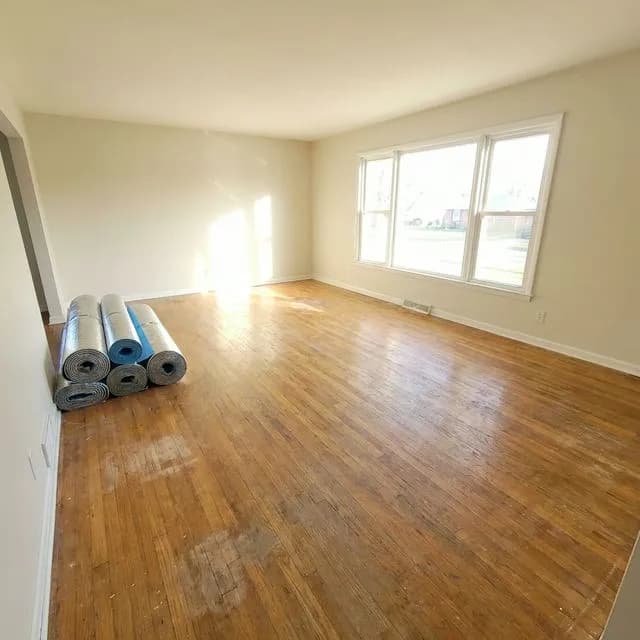
One of the most common questions we hear from homeowners across the Lehigh Valley and northern New Jersey is not about which flooring to choose or how much it costs. It is about when. When should I schedule my installation? Does the season matter? Will cold weather ruin my hardwood? Is summer too humid?
After completing over 4,000+ projects since 2003, we have seen every season throw its curveballs. We have installed hardwood in January snowstorms and laid tile during August heat waves. We have dealt with spring rain that would not quit and fall days so perfect you almost forget you are working. And here is the thing — every season works. But every season has its quirks, and understanding those quirks is the difference between a floor that performs beautifully for decades and one that develops problems within the first year.
This guide is our honest breakdown of how each season affects flooring installation in Pennsylvania and New Jersey specifically. Not generic advice from a national website. Actual observations from a team of 35+ installers who work in this climate year-round.
Why Timing Matters More Than You Think
Most homeowners assume that flooring installation is a completely indoor activity, so the weather outside should not matter. And on the surface, that makes sense. We are working inside your home, not pouring a driveway. But the reality is more complicated than that.
The air inside your home is directly connected to the air outside. When it is 95 degrees and humid in July, your indoor air carries more moisture — even with the AC running. When it is 15 degrees in January and your furnace has been blasting for two months straight, your indoor humidity can drop to 20 percent or lower. These swings affect every flooring material differently, and they affect the adhesives, sealants, and finishes we use during installation.
Here in the Lehigh Valley, we deal with a wider range of conditions than most people realize. Summer humidity regularly hits 60 to 70 percent outdoors. Winter can plunge indoor humidity to 25 to 35 percent if you do not run a humidifier. That is a massive swing, and it is the single biggest factor in how wood floors behave over their first year. A hardwood floor installed in August without proper humidity management will develop gaps by February. We have seen it dozens of times.
Beyond the material itself, timing affects three other things that homeowners tend to overlook:
- Scheduling availability. We are a crew of 35+professionals, and between April and October, every crew is booked solid. The wait time during peak season can stretch to 4 to 6 weeks. In the winter months, we can often start within a week or two.
- Material availability. Popular products sell out faster in spring and summer when the whole country is renovating. We have had clients fall in love with a specific white oak engineered plank in April only to find out it is backordered until June.
- Your own schedule. Installation means living without certain rooms for days. Some families find it easier to do this over summer break when the kids are out of school. Others prefer Thanksgiving week when they are traveling anyway. There is no wrong answer, but it is worth thinking about.
Spring Installation: The Sweet Spot (March-May)
If we had to pick one season as the all-around best for flooring installation in the Lehigh Valley and northern NJ, spring would be it. And it is not even close.
March through May gives you the most cooperative conditions for almost every flooring type. Temperatures are moderate — usually between 45 and 70 degrees outdoors, which means your home sits comfortably at 65 to 72 degrees without your HVAC working overtime. Indoor humidity naturally lands in the 40 to 55 percent range, which is right in the sweet spot for hardwood acclimation and installation. The wood is happy. The adhesives cure properly. And the finish dries without the issues you get in extreme heat or cold.
We did a whole-house hardwood installation in a colonial in Nazareth last April. Twelve hundred square feet of white oak across the first floor. The material acclimated in four days with zero issues — the moisture content readings were nearly identical to the subfloor by day three. The site-finished polyurethane dried evenly, no bubbling, no clouding. The homeowner was walking on it by the following Tuesday. It was one of those jobs where everything just went right, and spring conditions were a big part of that.
Spring is also ideal for luxury vinyl plank installations. The moderate temperatures mean the planks are not too cold (which makes them brittle and harder to click together) or too warm (which makes them slightly soft and prone to expanding). We install LVP year-round and it is always fine, but spring installs just feel smoother from a workflow standpoint.
The downside of spring? Everyone else knows it is the best time too. March through May is when our phone starts ringing off the hook. Homeowners who spent all winter staring at their old carpet suddenly decide they cannot wait another day. Realtors are calling because their clients want new floors before listing the house in May. Builders are finishing winter projects and need us for final flooring. Our schedule fills up fast.
If you want a spring installation, the best move is to call us in January or February to get on the calendar. We know that sounds early, but a 4 to 6 week lead time is normal during peak season. Homeowners who plan ahead get the best installation windows. Homeowners who call in mid-April asking for a next-week install are usually disappointed.
Summer: Great Weather, Busiest Schedule
Summer in the Lehigh Valley and northern NJ means heat, humidity, and a packed installation schedule. It is a great time to get flooring done — but it comes with some asterisks.
The biggest factor in summer is humidity. From June through August, outdoor humidity in our area regularly sits at 60 to 70 percent. Even with central air conditioning running, indoor humidity can creep up to 50 to 60 percent in many homes, especially older ones in Allentown, Bethlehem, and the surrounding area that have less-than-perfect insulation or aging HVAC systems.
For hardwood installation, high humidity is a real concern. Wood absorbs moisture from the air. If you install hardwood when the indoor humidity is at 60 percent, the planks are swollen with moisture. Come January, when your furnace has been running for weeks and the indoor humidity drops to 30 percent, those planks are going to shrink. That shrinkage creates gaps between boards — sometimes a sixteenth of an inch, sometimes more. It is not a defect. It is physics. And it is preventable.
The solution is straightforward but requires discipline: run your air conditioning and keep the indoor humidity between 35 and 55 percent during acclimation and installation. If your AC alone cannot get the humidity down, add a dehumidifier in the installation area. We check moisture content readings on both the wood and the subfloor before we start — if the numbers are off, we will tell you we need to wait. It is better to delay a day or two than to install a floor that is going to gap in six months.
We did a job in a Morristown townhouse last July — 800 square feet of engineered hickory. The homeowner had the AC set to 76 degrees, which is comfortable for living but was not pulling enough moisture out of the air. Our moisture meter was reading the wood at 9 percent but the subfloor at 11 percent. We asked them to crank the AC down to 70 and run a dehumidifier for 48 hours. When we came back, everything was balanced. That floor looks perfect eight months later, no gaps, no movement.
For LVP and tile, summer humidity is much less of a concern. LVP does not absorb moisture, so the humidity question is mostly irrelevant. Tile and grout are completely unaffected by humidity. If you are doing a tile bathroom or LVP basement in July, go for it — no special precautions needed beyond the basics.
The other summer challenge is scheduling. June through August is our absolute peak. We run every crew we have, six days a week, and we still cannot accommodate everyone who calls. This is when we see the longest wait times — sometimes 5 to 6 weeks from initial call to installation day. If you have a summer project in mind, reaching out in March or April gives you the best shot at getting the dates you want.
One advantage of summer that people forget: if your project requires furniture to be moved out temporarily, summer is the easiest time to store things in a garage or use a PODS container in the driveway without worrying about freezing temperatures damaging your belongings. It sounds minor, but read our guide on preparing your home for installation — the furniture situation is a bigger deal than most people expect.
Fall: Our Recommended Season for Hardwood
If you specifically want hardwood floors and you have the luxury of choosing when to do it, we are going to steer you toward fall every single time. September through November is, in our professional opinion, the absolute best window for hardwood installation in Pennsylvania and New Jersey.
Here is why. By mid-September, the summer humidity has broken. Outdoor humidity drops from the 60 to 70 percent range down to 40 to 55 percent. Your AC is not working as hard, and your furnace has not kicked in yet. Indoor conditions naturally settle into that 40 to 50 percent humidity range and 65 to 72 degree temperature zone that hardwood loves. You do not need to run a dehumidifier. You do not need a humidifier. Your home is just... right.
This matters because the conditions at the time of installation become the baseline for how the wood behaves. If you install when humidity is moderate, the wood will expand slightly in summer and contract slightly in winter — but the movement stays within an acceptable range. Install at a humidity extreme (the peak of summer or the dead of winter) and the wood has further to travel in the opposite direction. That means bigger gaps or tighter pressure points.
Danny Reyes, our lead installer who holds NWFA certification, puts it this way: "You want to install wood when the conditions are in the middle of what this house will experience over the year. That way the floor moves a little in both directions instead of a lot in one direction." Fall in the Lehigh Valley gives you exactly that middle ground.
There is another practical advantage to fall. The summer rush has died down by late September, but we have not hit the holiday slowdown yet. Our crews are available, lead times are shorter (often 2 to 3 weeks instead of 5 to 6), and we can sometimes accommodate last-minute schedule changes. It is the sweet spot between busy season and the winter lull.
We did a beautiful wide-plank white oak install in an Easton farmhouse last October. The homeowners had been going back and forth between spring and fall, and we recommended they wait for October. The acclimation went perfectly — the moisture content of the wood matched the subfloor within 48 hours instead of the usual 4 to 5 days. The site-finished oil-based poly cured in textbook fashion. Windows open, great airflow, no extreme temperatures. That floor is stunning and it has not moved a hair through a full winter and summer cycle.
The one caveat with fall is Thanksgiving. Every year without fail, we get a wave of calls in late October from homeowners who want new floors before the family comes for Thanksgiving. If the project is straightforward — a single room, LVP, no subfloor issues — we can usually make it happen. But a whole-house hardwood install with site-applied finish that needs to be done before November 27? That is tight. Very tight. If Thanksgiving is your deadline, call us by September at the latest.
Winter Installation: Yes, It Works - With Precautions
Winter is the season that scares people away from flooring projects, and honestly, we understand why. It is cold. The air is dry. Your furnace is running constantly. Everything about winter feels hostile to a project that involves natural wood, adhesives, and finishes.
But here is the truth: we install flooring all winter long, and the results are just as good as any other season — when the indoor environment is managed properly.
The number one issue in winter is low humidity. When your furnace runs for months on end, it dries out the air inside your home. In the Lehigh Valley, we routinely see indoor humidity drop to 25 to 35 percent in January and February — sometimes even lower in homes with forced-air heating and no humidifier. At 25 percent humidity, solid hardwood will shrink noticeably. Gaps appear between boards. Engineered hardwood handles it better, but even engineered products are not immune to extreme dryness.
The fix is simple but non-negotiable: you need to maintain indoor humidity between 35 and 55 percent. A whole-house humidifier connected to your HVAC is the gold standard. If you do not have one, portable humidifiers in the installation area work too — you just need enough of them to move the needle. We bring a hygrometer to every winter job and we check the conditions before we start. If the humidity is below 30 percent, we are going to have an honest conversation with you about either adding humidity or waiting.
Acclimation takes longer in winter too. When hardwood is delivered to your home in December, it has been sitting in a warehouse that might have been 40 degrees. Your living room is 70 degrees. That is a 30 degree temperature swing, and the wood needs time to adjust. We extend our standard acclimation period from 3 to 5 days to 5 to 7 days for winter installations. It feels like a long time to have boxes of flooring sitting in your living room, but it is the difference between a floor that stays tight and one that develops problems by spring.
For luxury vinyl plank, winter is much simpler. LVP does not absorb moisture, so the humidity question is mostly irrelevant. The one thing to watch is temperature — if LVP gets too cold (below 50 degrees during installation), the planks become rigid and the click-lock joints can be harder to engage and more prone to cracking. We always make sure the material has reached room temperature before we start, and we never install in unheated spaces during winter.
Tile installation in winter works fine as long as the space is heated. Thin-set mortar needs temperatures above 50 degrees to cure properly, and it performs best between 60 and 75 degrees. In a heated home, that is not an issue. In an unheated garage, sunroom, or new construction where the HVAC is not running yet? We will either wait or bring in temporary heaters.
Here is the upside that makes winter installations genuinely attractive: availability and speed. December through February is our slowest period. We have crews available on shorter notice. Lead times drop from weeks to days in some cases. If you are flexible on timing and your home has proper humidity control, winter is actually a smart time to book. You avoid the spring and summer rush entirely, and you start enjoying your new floors while everyone else is still waiting for their spring appointment.
Humidity and Acclimation: The PA/NJ Factor
We have mentioned humidity a lot in this article, and that is because it is genuinely the most important environmental factor in flooring installation. Not temperature. Not rain. Humidity. And living in Pennsylvania and New Jersey means dealing with some of the widest humidity swings in the country.
Let us put some numbers on it. In the Lehigh Valley, typical outdoor relative humidity runs around 60 to 70 percent in July and August. By January and February, indoor humidity in a heated home (without a humidifier) can drop to 25 to 35 percent. That is a swing of 30 to 40 percentage points over the course of a year. For context, the NWFA (National Wood Flooring Association) recommends maintaining indoor humidity between 30 and 50 percent year-round for hardwood floors. Hitting that target in our climate takes active management.
What humidity does to wood flooring: Wood is hygroscopic — it absorbs and releases moisture in response to its environment. When humidity rises, wood expands across the grain. When humidity drops, it contracts. This is normal and expected. The problems happen when the movement exceeds what the installation can accommodate. Solid hardwood moves more than engineered. Wider planks move more than narrower ones. And species vary — red oak and maple are more reactive than white oak and hickory.
Here are the real-world effects we see in PA and NJ homes:
- Gaps in winter: The most common complaint we get calls about. Homeowners notice gaps between hardwood boards in January or February. In most cases, the floor was installed correctly — the house is just too dry. Running the furnace without a humidifier pulls indoor humidity down to 20 to 25 percent, and the wood responds by shrinking. Those gaps usually close back up by May when the humidity rises. If they persist year-round, then there may be an installation issue.
- Cupping in summer: The opposite problem. When the bottom of a plank absorbs more moisture than the top (common over concrete slabs or in humid basements), the edges rise higher than the center. We see this in homes without AC or with poor ventilation, especially in the more humid parts of northern NJ closer to the coast.
- Buckling: The extreme case. When wood absorbs so much moisture that it has nowhere to expand, it lifts off the subfloor. This is rare in properly installed floors because we leave expansion gaps at the walls, but it can happen after a flood, a major plumbing leak, or if the home is left without climate control for extended periods.
Acclimation is the prevention. When we deliver flooring material to your home, we are giving the wood time to reach equilibrium with your indoor environment. We check the moisture content of both the flooring and the subfloor using a pin meter. The NWFA standard says the difference between the two should be no more than 2 to 4 percent, depending on the species and plank width. We do not install until those numbers are right.
How long acclimation takes depends entirely on the gap between the material's starting conditions and your home's environment. A delivery in October when your house is 68 degrees and 45 percent humidity? The wood might be ready in 2 to 3 days. A delivery in January when your house is 70 degrees but 28 percent humidity and the wood just came from a cold, damp warehouse? That could take 5 to 7 days or longer.
This is not us being overly cautious. This is us protecting your investment. A 1,200 square foot hardwood floor installed at $12 to $15 per square foot is a $14,000 to $18,000 project. Skipping a few days of acclimation to meet an arbitrary deadline is not worth risking that kind of money. Read our hardwood floor maintenance guide for long-term humidity management once the floor is installed.
How to Book During Peak Season Without Waiting Months
So you have decided when you want your flooring installed. Great. Now you need to actually get on our schedule. And depending on when you are calling, that can either be dead simple or a real challenge.
Here is our honest breakdown of scheduling patterns throughout the year:
- January to February: Our slowest months. Lead times of 1 to 2 weeks. This is the best time to call if you want fast turnaround, and we often have the flexibility to accommodate specific date requests. It is also when we occasionally run promotions since our crews have more availability.
- March to April: Things start picking up. Lead times climb to 2 to 4 weeks. This is when smart homeowners who want a spring install are already on the calendar. If you want an April installation, call in February.
- May to August: Peak season. Lead times of 4 to 6 weeks, sometimes longer for large projects. Every crew is booked. We prioritize in the order projects are confirmed, so early deposits lock in your spot. This is when we occasionally have to turn people away or push projects into September.
- September to October: Still busy but starting to ease. Lead times of 2 to 4 weeks. This is our sweet spot for availability versus conditions — great weather, reasonable wait times. Highly recommend.
- November to December: The holiday dip. Some homeowners pause projects for Thanksgiving and Christmas. Lead times drop to 1 to 3 weeks. If you do not mind having work done during the holiday season, you can get excellent scheduling.
Here are the strategies that actually work for getting installed sooner:
1. Call early and put down a deposit. We hold dates based on confirmed bookings, not verbal commitments. A deposit locks in your installation window. We have had clients call in January for a June install and get their first-choice week. We have also had clients call in May for a June install and hear that the earliest opening is late July. The math is simple.
2. Be flexible on the specific week. If you tell us "I need the second week of June and nothing else works," we might not be able to help. If you tell us "any week in June works," we can almost always find a slot. Flexibility is the single biggest factor in getting a faster booking.
3. Have your material ready. One of the most common reasons for scheduling delays is not our availability — it is the material not being in stock or not delivered in time. If you are supplying your own material, make sure it is at your home and acclimating before your installation date. If we are supplying the material, we will coordinate delivery with your install date, but special orders from manufacturers can take 2 to 4 weeks to arrive. Factor that into your timeline.
4. Consider a winter install. If your project is LVP, tile, or laminate, winter is a great time to get it done. The conditions are easily managed for these materials, and our availability is wide open. Even hardwood works fine in winter with proper humidity control, as we covered earlier. The homeowners who are willing to go against the grain — no pun intended — and schedule in the off-season get faster service, more attention, and sometimes better pricing.
5. Bundle rooms for priority scheduling. Whole-house projects and multi-room installs get priority on our calendar because they make better use of crew time. If you are doing the living room now and thinking about bedrooms later, consider doing it all at once. You save on mobilization costs, you get one disruption instead of two, and we can schedule the whole thing as a single project instead of fitting in a small job between larger ones.
At the end of the day, the best time to install flooring is when your home is ready, the conditions are managed, and you have a crew you trust. We have been doing this across the Lehigh Valley and northern New Jersey since 2003, and we have never told a homeowner they picked the wrong month. We have told plenty of homeowners they needed to fix their humidity, acclimate their material longer, or plan further ahead. But the month on the calendar? That part is flexible. The preparation is what makes the difference.
About the Author
Lead Installer — Hardwood Specialist
Certified: NWFA, EPA RRP
Danny has been with VM Power since 2014 and leads our hardwood division. He specializes in wide-plank installations and custom patterns — herringbone, chevron, borders — the work most crews won't touc...
You Might Also Like
How to Prepare Your Home for Flooring Installation
Every week we show up to a home where the living room is still full of furniture and the dog is loose. Here's everything...
Read: How to Prepare Your Home for Flooring In… Cost GuideHow Much Does Flooring Installation Cost in 2026? Complete Price Guide
Tired of vague price ranges from sites that have never swung a hammer? Here are real, local flooring costs pulled from p...
Read: How Much Does Flooring Installation Cost… MaintenanceHow to Maintain and Protect Your Hardwood Floors
Most hardwood damage we see isn't from age — it's from bad cleaning habits and ignored humidity. Here's the exact care r...
Read: How to Maintain and Protect Your Hardwoo…