Danny Reyes
Lead Installer — Hardwood Specialist
Best Flooring for Allergies & Indoor Air Quality
If you or someone in your family deals with allergies, asthma, or chemical sensitivities, your flooring matters more than you probably realize. The floor is the largest surface in your home, and it has a direct impact on what you breathe every day. Across our service areas in eastern Pennsylvania and northern New Jersey, we see allergy concerns come up constantly — and it makes sense. The Lehigh Valley and the NJ corridor experience high pollen counts from spring through fall, humid summers that encourage mold growth, and long winters where homes are sealed tight with recirculated air.
Over 4,000+ projects since 2003, we've helped hundreds of families choose flooring specifically to improve their indoor air quality. This guide covers what we've learned — which flooring types trap allergens, which ones help, what VOCs actually mean for your health, and how proper installation makes a bigger difference than most people expect.
How Your Flooring Affects Indoor Air Quality
The EPA estimates that Americans spend roughly 90 percent of their time indoors, and indoor air can be two to five times more polluted than outdoor air. Your flooring plays a surprisingly large role in that equation. Every floor in your home either traps allergens or allows them to be easily removed. It either emits chemicals into your air or stays inert. It either supports mold growth in humid conditions or resists it.
Here in Pennsylvania and New Jersey, we deal with a climate that tests flooring from every angle. Summer humidity regularly pushes above 70 percent — prime conditions for dust mites and mold. Spring and fall bring heavy pollen loads from trees, grasses, and ragweed that get tracked into homes on shoes and pet paws. And from November through March, homes are buttoned up tight with forced-air heating systems that recirculate whatever is trapped in your flooring back into the air you breathe.
The three main ways your flooring affects indoor air quality are allergen accumulation (dust mites, pollen, pet dander, and mold spores trapped in or on the floor surface), chemical emissions (VOCs released from the flooring material, adhesives, and finishes), and moisture management (how the floor responds to humidity and whether it creates conditions for biological growth). A floor that performs poorly on any one of these factors can make allergy symptoms noticeably worse. A floor that performs well on all three can be a genuine health improvement for your household.
The Worst Flooring for Allergy Sufferers
Let's start with the one flooring type that allergists and pulmonologists consistently recommend against: wall-to-wall carpet. We install carpet and we appreciate its comfort, warmth, and sound absorption. But we are not going to pretend it is a good choice if allergies are a primary concern in your home.
Carpet fibers act as a reservoir for allergens. Dust mites — one of the most common indoor allergy triggers — thrive in carpet because the fibers provide the warm, humid microenvironment they need to reproduce. A single square yard of carpet can harbor as many as 100,000 dust mites. Regular vacuuming removes surface-level debris but cannot reach allergens embedded deep in the pile and backing. Even HEPA-filter vacuums only capture a fraction of what accumulates over time.
Pet dander is another problem. If you have dogs or cats, the dander proteins (the actual allergen, not the hair itself) bond to carpet fibers and persist for months even after professional cleaning. We've pulled up carpet in homes where the family hasn't had a pet in two years, and the pad underneath still tested positive for elevated allergen levels. That is how persistent these proteins are in fibrous materials.
Mold is the third concern, especially in our PA/NJ climate. Carpet installed over concrete slabs — common in basements and some ground-floor rooms — can trap moisture between the pad and the slab. You won't see the mold because it grows underneath, but you may smell it, and your lungs will react to the spores long before the problem becomes visible. We've ripped out basement carpet in homes across Bucks County and Morris County that looked fine on the surface but had significant mold colonies on the pad and subfloor underneath.
Best Flooring Options for Allergies
Hard-surface flooring is universally recommended by allergists because allergens sit on top of the surface rather than embedding in fibers. That means regular damp mopping actually removes them. Here are the options we recommend most often for allergy-sensitive households, ranked by overall allergy-friendliness.
Hardwood Flooring
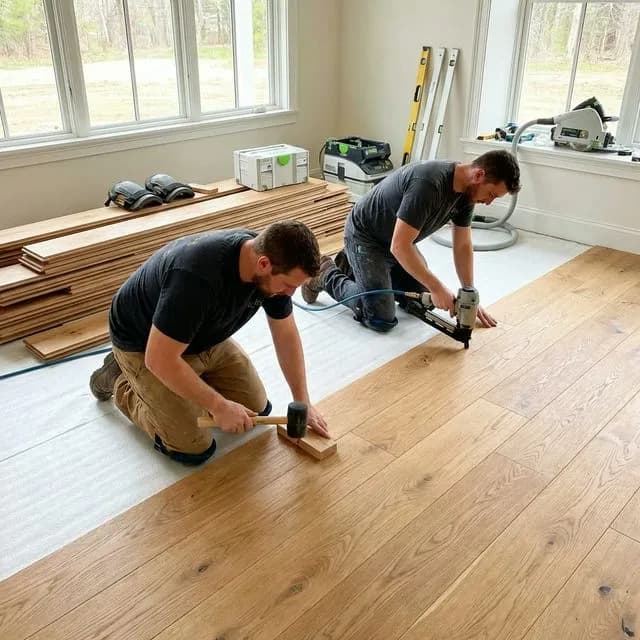
Solid and engineered hardwood is our top recommendation for allergy sufferers. The smooth, sealed surface does not trap dust mites, pollen, or pet dander. Allergens sit on top and are easily removed with a microfiber dust mop or damp mop. Hardwood does not support mold growth under normal indoor conditions. And when finished with water-based polyurethane (which we use as our standard finish), the VOC emissions are minimal — most off-gassing is complete within 48 to 72 hours of application.
Hardwood also handles the PA/NJ humidity cycle well when properly installed with correct expansion gaps and acclimated to the home's environment before installation. We typically acclimate hardwood in the home for 5 to 10 days before installing, which helps the wood adjust to local humidity levels and minimizes seasonal movement.
Porcelain and Ceramic Tile
Tile flooring is arguably the single most allergen-resistant flooring you can install. Porcelain and ceramic are inert — they emit zero VOCs, do not absorb moisture, and provide no habitat for dust mites or mold. The surface is completely non-porous when properly glazed, and cleaning is as simple as damp mopping with a mild cleaner.
The caveat with tile is the grout lines. Grout is porous and can harbor mold and mildew if not properly sealed and maintained, particularly in bathrooms and kitchens where moisture is constant. We recommend epoxy grout for allergy-sensitive homes — it is non-porous, stain-resistant, and does not support mold growth the way standard cement grout can. Sealing cement grout annually is the alternative if epoxy grout is not in the budget.
Luxury Vinyl Plank
Luxury vinyl plank is a practical allergy-friendly option, especially for rooms where waterproof performance is important — basements, bathrooms, kitchens, and laundry rooms. The smooth, non-porous surface does not harbor allergens, and the waterproof construction means zero risk of mold growth from moisture trapped beneath the floor.
The important qualifier with LVP is product quality. Cheap vinyl from unknown manufacturers can emit significant levels of VOCs — including formaldehyde and phthalates — that irritate respiratory systems and worsen allergy symptoms. We only install LVP products that carry FloorScore or GreenGuard Gold certification. These certifications mean the product has been independently tested and meets strict chemical emission standards. For more detail on how we evaluate these products, see our eco-friendly flooring guide.
Laminate Flooring
Laminate offers a hard surface that is easy to clean and does not trap allergens in the same way carpet does. Modern laminate from major manufacturers meets CARB Phase 2 formaldehyde emission standards. It is a budget-friendly hard-surface option, though we do rank it below hardwood, tile, and certified LVP for allergy-sensitive homes because the HDF core can be susceptible to moisture damage if water penetrates the seams — and moisture damage creates mold risk.
VOCs and Off-Gassing: What You Need to Know
Volatile organic compounds are chemicals that evaporate at room temperature and enter your indoor air. In flooring, VOCs come from three sources: the flooring material itself, the adhesive used to install it, and the finish applied to the surface. For allergy and asthma sufferers, VOC exposure can trigger symptoms ranging from headaches and eye irritation to full respiratory episodes.
Formaldehyde is the VOC that gets the most attention in flooring, and for good reason. It is a known carcinogen at high exposure levels and a respiratory irritant at lower levels. Formaldehyde is commonly found in the adhesive resins used in engineered hardwood, laminate, and some vinyl products. The EPA and California's CARB Phase 2 standard have set emission limits for composite wood products, and any reputable flooring product sold in the US today should meet these standards at minimum.
But formaldehyde is not the only concern. Other VOCs commonly associated with flooring include toluene, benzene, xylene, and acetaldehyde. These can come from oil-based polyurethane finishes, solvent-based adhesives, and certain vinyl formulations. This is why we emphasize third-party certifications rather than just looking at formaldehyde numbers. FloorScore tests for a broad range of VOCs and certifies products against the California Section 01350 standard. GreenGuard Gold goes even further with stricter limits designed to be safe for sensitive populations including children and the elderly.
One thing we want to be clear about: even the lowest-VOC flooring will have some detectable emissions immediately after installation. The goal is not zero exposure — that is unrealistic. The goal is choosing products and methods that bring emissions down to levels that are safe for sensitive individuals, and then ventilating properly to clear the remaining VOCs as quickly as possible. For most certified products, the air quality returns to pre-installation baseline within one to two weeks.
Flooring Installation Tips for Allergy-Sensitive Homes
Choosing the right flooring material is only half the equation. How that floor is installed matters just as much for indoor air quality. Here are the installation practices we follow for allergy-sensitive projects.
Tear-out containment. Removing old carpet or flooring releases a concentrated burst of accumulated allergens — dust mites, mold spores, pet dander, and fine particulate matter that has been trapped for years. Our crew seals off the work area with plastic sheeting, runs negative-air machines with HEPA filtration during tear-out, and bags all demolished material immediately. This is especially important in older homes across the Lehigh Valley and northern New Jersey where carpet has been down for decades.
Lead-safe practices in pre-1978 homes. If your home was built before 1978, old flooring layers, paint, and adhesives may contain lead. Disturbing lead-containing materials creates lead dust — a serious health hazard, especially for children. We hold EPA RRP (Renovation, Repair, and Painting) certification, which means our team is trained in federal lead-safe work practices including containment, HEPA vacuuming, and proper disposal. This is not optional for pre-1978 homes — it is a federal requirement, and we take it seriously across every project in PA and NJ.
Subfloor preparation. Before any new floor goes down, we inspect and prepare the subfloor. For allergy-sensitive projects, this means checking for moisture (we use pin and pinless meters to verify that concrete slabs meet manufacturer moisture limits), treating any visible mold with antimicrobial solution, and ensuring the subfloor is clean, level, and dry. A new hardwood floor installed over a moldy subfloor is not going to solve your allergy problems — the mold will continue to release spores from underneath.
Adhesive selection. When glue-down installation is required, we specify low-VOC or zero-VOC adhesives from Bostik, Mapei, or similar manufacturers that meet GreenGuard Gold emission standards. The adhesive can actually be a bigger VOC source than the flooring itself, so this is not a detail to overlook. For click-lock luxury vinyl and floating laminate installations, we eliminate adhesive entirely — the floor clicks together mechanically over an underlayment pad, which is the lowest-emission installation method available.
Post-installation ventilation. We advise all allergy-sensitive customers to keep the home well-ventilated for a minimum of 72 hours after installation. Open as many windows as weather allows, run ceiling fans and portable fans to circulate air, and set the HVAC system to fan-on mode with a fresh filter (MERV 13 or higher is ideal). If anyone in the household has severe asthma or chemical sensitivity, staying elsewhere for the first 24 to 48 hours after installation is a reasonable precaution.
Timing matters. If possible, schedule flooring installation during a season when you can keep windows open comfortably — spring and fall are ideal in the PA/NJ area. Installing in the dead of winter when the house is sealed tight makes it harder to ventilate adequately. Summer installations work too, but running air conditioning with windows closed slows the off-gassing clearance compared to natural cross-ventilation. We discuss timing with every allergy-sensitive customer to find the best window. For more on installation timing, see our best time to install flooring guide.
Maintenance for Allergy-Friendly Floors
Installing the right floor is the foundation. Maintaining it properly is what keeps allergen levels low over the long term. Here is the maintenance routine we recommend for allergy-sensitive households.
Daily to every-other-day: Dry dust mop with a microfiber pad. Microfiber traps particles rather than pushing them into the air — this is a meaningful difference compared to traditional brooms, which scatter fine dust and allergens. If you have pets that shed, daily is not overkill. The dander and hair that accumulate on a hard-surface floor in 24 hours would take weeks to vacuum out of carpet.
Weekly: Damp mop with a pH-neutral cleaner. For hardwood, use a manufacturer-recommended cleaner (Bona hardwood floor cleaner is what we recommend most often). For tile, a mild detergent solution works. For LVP, follow the manufacturer's guidelines — most recommend a damp mop with a product-specific cleaner or plain water. Avoid excess water on hardwood and laminate, as standing moisture can seep into seams and cause the damage that leads to mold.
Seasonally: Replace HVAC filters every 90 days at minimum — every 60 days if you have pets or severe allergies. Use MERV 13 filters, which capture particles down to 0.3 microns including pollen, mold spores, and dust mite debris. During the PA/NJ pollen season (typically April through June for tree pollen, and August through October for ragweed), consider running a standalone HEPA air purifier in bedrooms and main living areas.
Annually: Have hardwood floors professionally cleaned and inspected. We check for finish wear, gaps that might trap debris, and any signs of moisture issues. For tile floors, reseal cement grout lines annually to maintain the moisture barrier and prevent mold growth in grout joints. These annual touch-ups keep your allergy-friendly floor performing at its best for years.
Frequently Asked Questions
What is the best flooring for allergy sufferers?
Hardwood flooring is widely considered the best choice for allergy sufferers because it has a smooth, non-porous surface that does not trap dust mites, pet dander, pollen, or mold spores. Porcelain and ceramic tile are equally effective. Luxury vinyl plank is a strong budget-friendly alternative, provided it carries GreenGuard Gold or FloorScore certification for low VOC emissions. The key is choosing a hard-surface floor that can be damp-mopped regularly without harboring allergens in fibers or textured surfaces.
Does carpet make allergies worse?
Yes, carpet is the worst flooring choice for allergy sufferers. Carpet fibers trap and hold dust mites, pet dander, pollen, mold spores, and other allergens deep in the pile where regular vacuuming cannot fully remove them. Studies from the American College of Allergy, Asthma and Immunology show that carpeted rooms contain significantly higher concentrations of airborne allergens than rooms with hard-surface flooring. If you have carpet and suffer from allergies, replacing it with hardwood, tile, or luxury vinyl can make a measurable difference in your symptoms.
What are VOCs in flooring and are they dangerous?
VOCs, or volatile organic compounds, are chemicals that off-gas from flooring materials, adhesives, and finishes into your indoor air. Common flooring-related VOCs include formaldehyde, benzene, and toluene. At high concentrations, these chemicals can trigger headaches, respiratory irritation, and worsen allergy and asthma symptoms. To minimize exposure, choose flooring products with FloorScore or GreenGuard Gold certification, use low-VOC adhesives, and ventilate your home thoroughly during and after installation.
How long do new floors off-gas after installation?
Most flooring products release the majority of their VOCs within the first 48 to 72 hours after installation. Water-based polyurethane finishes on hardwood typically cure within 3 to 5 days. Luxury vinyl plank off-gassing usually subsides within 1 to 2 weeks. To speed the process, keep windows open, run fans, and maintain good ventilation for at least 72 hours after installation. People with severe chemical sensitivities may want to stay out of the home for the first 24 to 48 hours.
Is luxury vinyl plank flooring safe for people with allergies?
High-quality LVP from reputable manufacturers is generally safe for allergy sufferers. The smooth, waterproof surface does not harbor dust mites or mold, and it is easy to clean with damp mopping. The main concern is VOC emissions from cheaper products. Always choose LVP that carries FloorScore or GreenGuard Gold certification. Avoid bargain-bin vinyl from unknown manufacturers — these products may contain higher levels of phthalates and formaldehyde. See our eco-friendly flooring guide for more on evaluating product certifications.
Do I need to worry about lead in flooring in older PA and NJ homes?
If your home was built before 1978, there is a real possibility that existing flooring, paint, or underlayment contains lead. Disturbing lead-containing materials during a flooring renovation can release lead dust into your home, which is especially dangerous for children and pregnant women. The EPA requires that any contractor working in pre-1978 homes be EPA RRP certified for lead-safe work practices. VM Power Flooring holds EPA RRP certification and follows strict containment and cleanup protocols when working in older homes across Pennsylvania and New Jersey. Contact us to discuss lead-safe flooring renovation for your home.
About the Author
Lead Installer — Hardwood Specialist
Certified: NWFA, EPA RRP
Danny has been with VM Power since 2014 and leads our hardwood division. He specializes in wide-plank installations and custom patterns — herringbone, chevron, borders — the work most crews won't touc...
You Might Also Like
Eco-Friendly and Sustainable Flooring Options for 2026
Sustainable flooring is full of marketing claims. Here's what FSC, FloorScore, and GreenGuard actually mean — and which ...
Read: Eco-Friendly and Sustainable Flooring Op… ComparisonHardwood vs. Luxury Vinyl Plank: Which Is Better for Your Home?
After installing thousands of floors across the Lehigh Valley and northern New Jersey, here's what we actually tell home...
Read: Hardwood vs. Luxury Vinyl Plank: Which I… Buying GuideBest Flooring for Dogs and Cats: An Installer's Honest Guide
After installing floors in hundreds of homes with pets, we know exactly which materials survive claws, accidents, and zo...
Read: Best Flooring for Dogs and Cats: An Inst…