Vincent Karaca
Founder & Master Installer
LVT vs LVP: Luxury Vinyl Tile vs Plank Explained
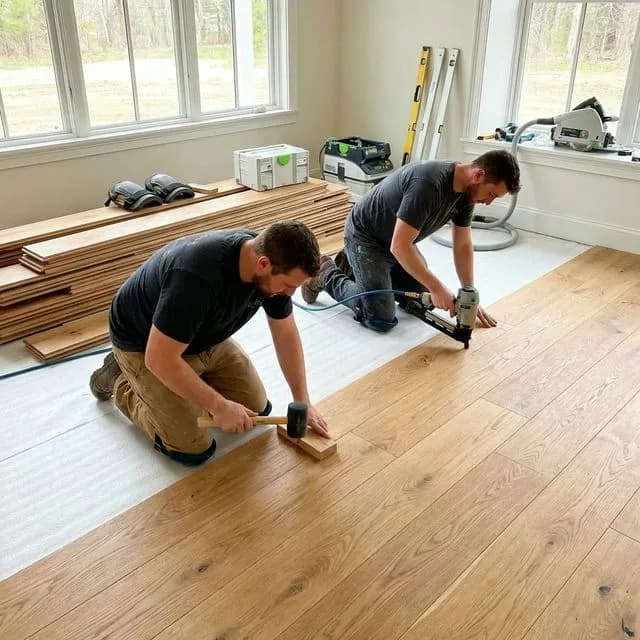
We get this question at least once a week: "Should I go with vinyl tile or vinyl plank?" The short answer is that LVT and LVP are made from the same materials and offer the same durability. The real difference is the shape and the look they create. But that shape difference matters more than most people realize when it comes to design options, installation patterns, and which rooms they suit best. Here is what we tell homeowners across the Lehigh Valley and northern New Jersey when they are deciding between the two.
LVT vs. LVP: Understanding the Basics
Both LVT and LVP fall under the luxury vinyl category. They share the same layered construction: a rigid or flexible core (usually SPC or WPC), a printed design layer, and a clear wear layer on top. Both are 100% waterproof, scratch-resistant, and installed using a click-lock system in most cases.
The difference is shape. LVP (luxury vinyl plank) comes in long planks that look like hardwood. Standard dimensions are 6 to 9 inches wide and 36 to 48 inches long. The design layer mimics wood grain patterns like oak, hickory, and walnut.
LVT (luxury vinyl tile) comes in square or rectangular tile formats, typically 12x12, 12x24, or 18x18 inches. The design layer mimics stone, marble, slate, concrete, or ceramic tile patterns.
Some manufacturers also make LVT in larger format tiles (24x24 or even 24x48) for a more modern, minimal grout-line look. The construction is identical to LVP. Only the shape and printed design differ.
When to Choose LVP (Luxury Vinyl Plank)
LVP is the more popular option by a wide margin. Roughly 80% of the luxury vinyl projects we install use plank format. Here is where LVP makes the most sense.
Living Rooms, Bedrooms, and Hallways
The wood look works in virtually every living space. LVP creates visual continuity throughout a home, especially in open-concept layouts where one flooring runs from the front door through the kitchen, living room, and hallways. We install a lot of LVP in Northampton County homes where homeowners want the hardwood look without the humidity concerns or the price tag.
Whole-House Installations
When a client wants one floor throughout the entire main level, LVP is almost always the answer. The plank format reads as hardwood, transitions seamlessly between rooms, and handles every room including the kitchen. We can install 400 to 600 square feet per day with a two-person crew, making whole-house LVP projects surprisingly fast.
Kitchens
LVP has become the most popular kitchen flooring we install, overtaking tile in the past three years. The wood look coordinates with the living space, it is waterproof, and it is softer underfoot than tile for anyone who stands while cooking.
When to Choose LVT (Luxury Vinyl Tile)
LVT occupies a smaller but important niche. Here are the situations where tile format is the better call.
Bathrooms
The tile look belongs in bathrooms. LVT gives you the appearance of marble, travertine, or slate without the cold surface, the grout maintenance, or the cost of real stone. A 12x24 LVT in a marble pattern installed in a staggered layout is one of the most popular bathroom floors we install in Bethlehem and Allentown. It costs about half of what real porcelain tile would cost installed.
Entryways and Mudrooms
The tile format works well in high-impact areas where you want a clean, stone-like look. Entryways in PA and NJ homes take abuse from snow, salt, mud, and wet boots. LVT handles all of it without staining or cracking, unlike natural stone.
Laundry Rooms
A tile look in the laundry room makes design sense, and LVT is far cheaper and faster to install than ceramic. For a typical 50-square-foot laundry room, the difference between LVT and porcelain tile is $300 to $500 in total project cost.
Commercial Spaces
LVT in large-format squares (18x18 or 24x24) is popular in office lobbies, medical waiting rooms, and retail spaces. The stone look conveys professionalism, and the durability handles commercial foot traffic when you choose a 28-mil or higher wear layer.
Cost Comparison: LVT vs. LVP
Material costs for LVT and LVP are nearly identical at the same quality tier. Here is what we charge installed in PA and NJ:
- Entry-level LVP or LVT (12-mil wear layer): $5 to $7 per square foot installed
- Mid-range LVP or LVT (20-mil wear layer, SPC core): $7 to $9 per square foot installed
- Premium LVP or LVT (28-mil wear layer, attached pad): $9 to $11 per square foot installed
Where costs diverge is in installation labor. Standard LVP in a running bond (staggered) pattern installs at 400 to 600 square feet per day. LVT in a herringbone or diagonal pattern drops to 200 to 300 square feet per day because of the additional cuts and layout work. That pattern complexity can add $1 to $2 per square foot in labor.
Installation Patterns That Change the Look
One advantage of LVT over LVP is the variety of installation patterns available. Planks are almost always installed in a standard staggered (running bond) pattern. Tiles open up more options.
Staggered / Brick Pattern
The most common LVT layout. Rectangular tiles (12x24) are offset by half, just like subway tile on a wall. This is clean, modern, and efficient to install.
Straight Stack
Tiles aligned in a grid with no offset. This creates a very modern, minimalist look popular in contemporary bathrooms and commercial spaces. It requires a very flat subfloor because any lippage between tiles is immediately visible.
Herringbone
Individual tiles or planks arranged in a V-shaped zigzag pattern. This is one of the most visually striking layouts we install and has become increasingly popular in Lehigh Valley homes. It works with both LVT tiles and shorter LVP planks. Installation takes about twice as long as standard staggered, so expect the labor premium.
Diagonal
The same staggered or straight pattern but rotated 45 degrees. This makes small rooms feel larger but creates more waste (plan for 15% extra material instead of the usual 10%).
SPC vs. WPC Core: Which Is Better?
Both LVT and LVP come with two core options, and the core matters more than most homeowners realize.
SPC (Stone Polymer Composite) is denser, thinner, and more rigid. It handles heavy furniture and point loads without denting. SPC is our default recommendation for most residential and all commercial installations. It also works better over slightly imperfect subfloors because the rigidity bridges small dips.
WPC (Wood Polymer Composite) is softer, thicker, and warmer underfoot. It provides better sound dampening and is more comfortable to stand on. WPC is a good choice for bedrooms and living rooms where comfort matters more than point-load resistance.
In practice, SPC has taken over the market. About 75% of the luxury vinyl we install is SPC core. The rigidity, thinner profile, and lower cost have made it the industry standard. WPC still has a place in comfort-focused residential applications, but SPC is the workhorse.
Our Recommendation: How to Decide
Here is the simple framework we use when helping homeowners choose:
- Want a wood look? Go with LVP. It covers 80% of residential projects for a reason.
- Want a stone or tile look? Go with LVT. It belongs in bathrooms, entryways, and laundry rooms.
- Whole-house project? Use LVP for the main areas and LVT in bathrooms if you want the tile look there.
- Budget conscious? LVP in a standard staggered pattern is the most cost-effective option per square foot installed.
- Want a statement floor? LVT in herringbone or LVP in a chevron pattern creates a high-end look at a fraction of real hardwood or stone cost.
If you are in Lehigh County, Northampton County, or Bergen County NJ and want to see LVT and LVP samples side by side in your home, we bring a full sample kit to every consultation. Seeing the products in your actual lighting makes a bigger difference than any showroom visit.
Schedule a free in-home consultation or use our cost calculator to estimate your project.
Explore Our Related Services
About the Author
Founder & Master Installer
Certified: NWFA, CFI
Vincent started refinishing hardwood floors in his early twenties, working alongside his father on weekends between construction jobs in the Lehigh Valley. By 2012, he had enough repeat customers to g...
You Might Also Like
Hardwood vs. Luxury Vinyl Plank: Which Is Better for Your Home?
After installing thousands of floors across the Lehigh Valley and northern New Jersey, here's what we actually tell home...
Read: Hardwood vs. Luxury Vinyl Plank: Which I… ComparisonCOREtec vs. Shaw Floorte: An Installer's Honest LVP Comparison
We install both COREtec and Shaw Floorte every week. Here's an honest, spec-by-spec comparison from an installer who has...
Read: COREtec vs. Shaw Floorte: An Installer's… Room GuideBest Flooring for Kitchens in 2026: An Installer's Honest Guide
Kitchen flooring needs to handle water, impacts, heavy foot traffic, and still look great. Here's what we actually insta...
Read: Best Flooring for Kitchens in 2026: An I…