Erich Seyhan
Content Specialist
COREtec vs. Shaw Floorte: An Installer's Honest LVP Comparison
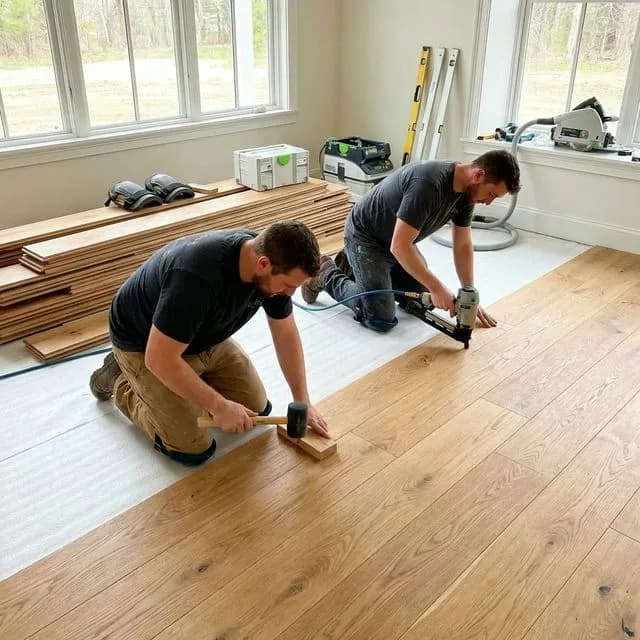
Why These Two Brands Dominate Our Installs
Over the past twelve years and more than 4,000+ flooring projects across Pennsylvania and New Jersey, we have watched the luxury vinyl plank market go from a handful of budget options to an overwhelming wall of choices at every showroom. Brands come and go. Importers rebrand. New names pop up at trade shows every year. But when homeowners ask us which LVP brands we actually trust — the ones we would put in our own homes — the answer keeps coming back to the same two: COREtec and Shaw Floorte.
Considering wood instead? Existing hardwood floors can often be renewed with professional hardwood floor refinishing rather than replaced.
That is not a marketing opinion. It comes from installing thousands of square feet of both, tearing up failures from other brands, fielding service calls, and watching how floors perform three, five, and eight years after installation. As an NWFA and CFI certified installer, I pay attention to things homeowners never think about — how the click system holds up after 500 feet of continuous run, whether the core stays flat on an imperfect subfloor, how the attached pad compresses over time under heavy furniture. Those details separate the brands that last from the ones that look good in the showroom and disappoint at year three.
COREtec essentially invented the rigid-core luxury vinyl category back in 2012 when they launched their original WPC product. They have had a decade-plus head start on core technology, and it shows. Shaw answered with the Floorte collection, leveraging their massive manufacturing and distribution network to bring competitive products to market at aggressive price points. Both companies have continued to push their product lines forward, and in 2026, both offer genuinely excellent flooring.
But they are not identical. Not even close. The differences matter — especially when you are spending $5,000 to $15,000 on a floor that needs to perform for the next 15 to 25 years. This guide breaks down exactly where each brand wins, where each falls short, and which one makes sense for your specific situation. No hedging. No "they're both great." Real opinions from someone who installs both every week.
Construction and Core Technology Compared
The core is the backbone of any rigid-core LVP plank. It determines how the floor feels underfoot, how it handles temperature changes, and how well it bridges minor subfloor imperfections. This is where COREtec and Shaw take slightly different approaches, and the differences are worth understanding.
COREtec's Core Construction
COREtec Pro Plus uses a dense SPC (stone plastic composite) core that measures approximately 5.5mm in total thickness with an attached cork underlayment. The SPC core itself is made from a limestone and PVC composite that is extremely rigid — we are talking about a core density around 1,950 kg/m³. That density is what gives COREtec its reputation for bridging subfloor imperfections without telegraphing through. The attached cork pad adds about 1mm and provides both sound dampening and a thermal barrier.
COREtec Plus Enhanced steps up to a WPC (wood plastic composite) core with a total thickness of approximately 8mm including the attached cork backing. The WPC core is slightly less dense than SPC but provides a softer, warmer feel underfoot. This is the line we recommend most for main living areas where comfort matters. The plank dimensions are generous — typically 7 inches wide by 48 inches long — and the embossed-in-register texture is some of the best in the industry.
COREtec Originals is their premium tier, featuring an SPC core with enhanced density, a 28-mil wear layer, and their thickest attached cork underlayment at approximately 1.5mm. Total plank thickness comes in around 8.5mm. Planks are 9 inches wide by 72 inches long in most styles — these are serious wide-plank formats that genuinely mimic high-end hardwood proportions. The core on the Originals line is noticeably denser in hand. When I tap a Pro Plus plank against an Originals plank, you can hear the difference.
Shaw Floorte Core Construction
Shaw Floorte Pro uses an SPC core with a total thickness of approximately 5mm to 6.5mm depending on the specific collection. Core density runs around 1,850 to 1,900 kg/m³ — slightly less than COREtec Pro Plus, but still in the premium range. Most Floorte Pro products come with an attached EVA foam pad rather than cork. The EVA pad is thinner (around 0.5mm to 1mm) and provides decent sound absorption but less thermal insulation than cork.
Shaw Floorte Elite bumps the total thickness to approximately 7mm to 7.5mm with an upgraded SPC core and a thicker pre-attached pad. The plank formats are wider — typically 7 inches by 48 inches — putting them in direct competition with COREtec Plus Enhanced. The Elite line uses Shaw's Fold-N-Tap locking system, which we will discuss more in the installation section.
Shaw Floorte Paragon is Shaw's answer to COREtec Originals. It features their densest SPC core, a 28-mil wear layer, and larger plank formats up to 9 inches wide by 60 inches long. The attached pad is a premium IXPE foam that performs well for sound reduction. Core density on the Paragon line is competitive with COREtec Originals at approximately 1,925 to 1,950 kg/m³.
| Specification | COREtec Pro Plus | Shaw Floorte Pro |
|---|---|---|
| Core type | SPC | SPC |
| Total thickness | ~5.5mm | ~5mm to 6.5mm |
| Core density | ~1,950 kg/m³ | ~1,850 to 1,900 kg/m³ |
| Attached pad | Cork (~1mm) | EVA foam (~0.5 to 1mm) |
| Plank width | 5" to 7" | 5" to 7" |
| Plank length | 48" | 48" |
| Specification | COREtec Originals | Shaw Paragon |
|---|---|---|
| Core type | SPC (enhanced) | SPC (premium) |
| Total thickness | ~8.5mm | ~7.5 to 8mm |
| Core density | ~1,950 kg/m³ | ~1,925 to 1,950 kg/m³ |
| Attached pad | Cork (~1.5mm) | IXPE foam (~1mm) |
| Plank width | 9" | 9" |
| Plank length | 72" | 60" |
Wear Layer and Scratch Resistance
The wear layer is the clear protective coating on top of the printed design layer. It is what stands between your floor's appearance and every dog nail, chair leg, dropped toy, and piece of gravel tracked in from the driveway. This is arguably the most important spec for long-term satisfaction, and both brands offer multiple tiers.
Wear Layer Thickness by Product Line
COREtec Pro Plus: 20-mil wear layer. This is adequate for moderate residential traffic — think a couple without pets or a home with light use. It handles everyday scuffs and cleaning products well but will show micro-scratches from dog nails over time if you have large, active dogs.
Shaw Floorte Pro: 20-mil wear layer. Comparable to COREtec Pro Plus in thickness. Shaw uses a slightly different urethane coating formula that they brand as their "Armor Flex" technology. In our side-by-side observations on jobsites, both 20-mil products resist surface scratches about equally. Neither is going to shrug off a heavy piece of furniture being dragged across the floor without pads.
COREtec Plus Enhanced: 20-mil wear layer with an additional UV-cured urethane top coat. COREtec claims this gives their Enhanced line better resistance to scuffs and staining than a standard 20-mil layer. From what we have seen on installed floors after several years of use, the Enhanced line does seem to hold its sheen a bit longer than the standard Pro Plus. But the difference is subtle — not dramatic.
Shaw Floorte Elite: 20-mil wear layer. Shaw positions the Elite as an upgrade over Floorte Pro primarily in core thickness and pad quality, not wear layer. This is a point where COREtec Plus Enhanced has a slight marketing edge, even though the actual wear layer measurements are close.
COREtec Originals: 28-mil wear layer. Now we are talking serious scratch resistance. This is the tier we recommend for families with large dogs, households with kids who play on the floor, and high-traffic commercial-light applications. We installed COREtec Originals in a veterinary clinic waiting room in Bethlehem three years ago and the floor still looks nearly new — and that room sees dozens of dogs every single day.
Shaw Floorte Paragon: 28-mil wear layer. Matches COREtec Originals mil-for-mil. Shaw's 28-mil coating is excellent. We have installed Paragon in several high-traffic commercial spaces in the Lehigh Valley and northern NJ, and the scratch resistance is right there with COREtec Originals. At this tier, the wear layer difference between brands is negligible.
Real-World Scratch Performance
Here is where the showroom spec sheet stops and real life starts. We did a project last year in a Nazareth home with two German Shepherds and a Golden Retriever. The homeowner had COREtec Pro Plus (20-mil) in the family room and Shaw Floorte Pro (20-mil) in the kitchen — the previous homeowner had installed them at different times. After three years of three large dogs, both floors showed the same level of micro-scratching. Neither was damaged. Neither looked brand new. They aged almost identically.
The takeaway: at the same wear layer thickness, COREtec and Shaw perform almost identically for scratch resistance. The brand matters less than the mil count. If you have pets, get 28 mil. If you do not have pets and your household is relatively gentle on floors, 20 mil is fine and will save you money.
Our rule of thumb: 20-mil wear layer for couples, light-traffic homes, and bedrooms. 28-mil wear layer for families with kids, homes with dogs over 30 pounds, and any room that doubles as an everything room. For more on pet-friendly flooring choices, check out our guide to the best flooring for pets.
Water Resistance and Durability
Both COREtec and Shaw market their LVP products as waterproof. And both are — with caveats. The planks themselves will not absorb water regardless of brand. You could submerge a COREtec plank and a Shaw plank in a bucket for a week and neither would swell, warp, or delaminate. The core construction on both brands genuinely resists water penetration.
The real-world water performance differences come down to two factors: the click system's tightness (which affects whether water penetrates seams) and the attached pad material (which affects what happens if moisture does get underneath).
COREtec's Water Advantage
COREtec uses an attached cork underlayment on all of their Plus and Originals lines. Cork is naturally antimicrobial and resistant to mold and mildew. If moisture does find its way beneath the planks — through a seam during a spill or from minor moisture vapor through a concrete slab — the cork layer acts as a buffer. It does not trap moisture the way some foam pads can. We have pulled up COREtec floors from basements that experienced minor water events and the cork backing was dry and intact underneath. That is a meaningful advantage for below-grade installations and rooms prone to occasional moisture.
This is one of the main reasons we lean toward COREtec for basement installations across PA and NJ. Our climate produces moisture vapor through concrete year-round, and the cork backing gives us an extra layer of confidence. If you are finishing a basement, our complete basement flooring guide goes deeper on moisture management and product selection.
Shaw's Water Performance
Shaw Floorte products use either EVA foam or IXPE foam for their attached pads. These are closed-cell foams that do not absorb water themselves, which is good. But they do not have the natural antimicrobial properties of cork. In a minor moisture event, the difference is probably irrelevant. In a sustained or recurring moisture situation — the kind we see regularly in Lehigh Valley basements — the cork gives COREtec a practical edge.
Shaw's click system (Fold-N-Tap and DropLock) creates tight seams that resist water penetration during normal use. We have not seen water seam failure on properly installed Shaw floors under normal residential conditions. The locking system is solid.
Manufacturer Coverage Comparison
Both brands offer lifetime residential coverage on their premium lines. Here is how they compare on the details that actually matter:
| Coverage Detail | COREtec | Shaw Floorte |
|---|---|---|
| Residential coverage | Lifetime | Lifetime |
| Commercial coverage | 15 years (Originals) | 15 years (Paragon) |
| Waterproof core coverage | Explicit coverage | Covered under general terms |
| Wear layer coverage | Lifetime residential | Lifetime residential |
| Fade resistance | Covered | Covered |
| Subfloor moisture exclusions | Less restrictive | More restrictive on certain subfloors |
| Professional install required | No (but recommended) | No (but recommended) |
Look and Feel: Which Looks More Like Real Wood?
This is where the conversation gets subjective, but we will give you our honest assessment based on looking at these products every single day.
COREtec has a slight edge in visual realism at the premium tier. The Originals line uses a high-definition printing process with embossed-in-register (EIR) texture that is genuinely difficult to distinguish from real hardwood at standing height. The grain patterns align with the printed image, so when you run your hand across the plank, the texture follows the visual grain. The color palette tends toward natural, muted tones — lots of white oak, walnut, and hickory looks that feel authentic rather than over-saturated.
COREtec Plus Enhanced also uses EIR texturing and the visual quality is strong. We installed Plus Enhanced in an oak colorway throughout a Bethlehem colonial last spring, and the homeowner's contractor — who had been working in the house for weeks — asked us what species of hardwood we put in. That is a genuine compliment to the visual quality.
Shaw Floorte competes well on visuals and wins on color selection. Shaw's design library is massive. They offer more colorways, more wood species looks, and more finish variations than COREtec. If you have a very specific aesthetic in mind — say a wire-brushed dark walnut with cool undertones — Shaw is more likely to have it. The Paragon line uses Shaw's proprietary "Pinnacle" printing technology with EIR texturing that matches COREtec's quality at that price point.
The Floorte Pro and Floorte Elite lines are visually good but a half-step behind their premium tier. The embossing is present but not as deep. The print resolution is solid but if you get down on your hands and knees and look closely, you can spot the digital printing pattern more easily than with the Paragon or COREtec Originals.
Pattern Repeat
Both brands use a limited number of unique plank designs per colorway, typically 6 to 12 unique patterns before they repeat. COREtec Originals offers 10 to 12 unique patterns in most styles, which is on the higher end. Shaw Paragon offers 8 to 10. At the mid-range tier, both brands use 6 to 8 unique patterns.
In a small bathroom, pattern repeat is irrelevant. In a 600-square-foot open concept living area, it can be noticeable if the installer does not stagger boxes carefully. We always pull from multiple boxes simultaneously during installation to minimize visible repeats, and with both brands, we can make a large room look natural with proper technique.
Underfoot Feel
This is where COREtec pulls ahead meaningfully. The cork underlayment on COREtec products creates a warmer, quieter feel underfoot than the EVA or IXPE foam on Shaw products. Walk across a COREtec Plus Enhanced floor in bare feet and then walk across a Shaw Floorte Elite floor in bare feet — the COREtec feels warmer and has a slight give that is more pleasant. The Shaw floor feels slightly harder and cooler. Neither is unpleasant. But if comfort is a priority, COREtec's cork backing is a genuine advantage.
Sound is the other piece. COREtec's cork backing absorbs impact sound better than foam pads. In a second-floor installation, this matters. We installed COREtec Plus Enhanced on the second floor of a two-story in Easton and the homeowner specifically commented that footsteps were quieter than their old carpet. That is not a claim we make about foam-backed products.
If you are choosing primarily on aesthetics and want the widest color selection, Shaw gives you more options. If you want the most realistic look combined with the best underfoot feel, COREtec's cork-backed products win in our experience.
Installation Experience: What the Installer Notices
Most comparison articles are written by people who have never installed either product. Here is what we notice on the jobsite after installing thousands of square feet of both brands.
Click System Quality
COREtec uses a traditional angle-angle locking system across most of their lines. You angle the long side in, then tap the short end to engage. The tolerances are tight — the clicks are firm and the seams pull together cleanly with minimal effort. We rarely get a defective click profile on COREtec products. When a plank does not engage properly, it is almost always because of debris in the locking groove rather than a manufacturing issue.
Shaw uses their Fold-N-Tap system on most Floorte products and DropLock on some premium lines. The Fold-N-Tap is a fold-down long side with a tap-in short end. It works well but requires a slightly different technique than the angle-angle system. We have noticed that the Shaw click profiles are marginally less forgiving — if your subfloor has minor undulation, Shaw's locking system can be slightly harder to engage cleanly. Not a dealbreaker by any means, but something we compensate for during installation.
The DropLock system on Shaw's newer premium products is actually quite good. It allows the plank to drop straight down and lock on both the long and short sides simultaneously. For our crew, it is slightly faster than traditional angle-angle on long continuous runs.
Cutting and Fitting
Both products cut cleanly with a standard score-and-snap method for straight cuts and a jigsaw for notches and curves. COREtec's denser core scores a tiny bit more cleanly — the snap is crisper. Shaw's slightly less dense mid-range products can occasionally feather at the snap line, requiring a quick pass with a utility knife to clean the edge. This is a minor point that no homeowner would ever notice, but installers will know what I mean.
Subfloor Tolerance
Both brands specify a maximum subfloor variance of 3/16 inch over a 10-foot span. In practice, COREtec's denser core is slightly more forgiving of minor imperfections. We have installed COREtec over subfloors that were borderline on flatness specs and the floor laid down without issues. With Shaw, we are more careful to address subfloor prep before installation because the thinner products can telegraph small bumps.
For a thorough explanation of what proper subfloor preparation looks like, read our guide on how to prepare your home for flooring installation.
Installation Speed
On a clean, flat subfloor with a straightforward room layout, our crew installs both brands at approximately the same speed — roughly 400 to 500 square feet per day per installer for a standard floating installation. Shaw's DropLock system can be marginally faster on long straight runs, while COREtec's angle-angle is faster in rooms with lots of cuts (hallways, closets, around cabinets). Over a full project, the time difference is negligible.
Price Comparison and Value Assessment
These are real material prices from our local PA and NJ market as of early 2026. Prices vary by colorway and retailer, but these ranges reflect what homeowners typically pay for material. Installation labor is additional and runs roughly the same for both brands — $2.00 to $3.50 per square foot depending on project complexity.
Material Cost Comparison
| Product Line | Material Cost (per sq ft) | Wear Layer | Total Thickness |
|---|---|---|---|
| COREtec Pro Plus | $4.50 to $5.75 | 20 mil | ~5.5mm |
| Shaw Floorte Pro | $3.75 to $5.25 | 20 mil | ~5 to 6.5mm |
| COREtec Plus Enhanced | $5.25 to $6.50 | 20 mil | ~8mm |
| Shaw Floorte Elite | $4.50 to $6.00 | 20 mil | ~7 to 7.5mm |
| COREtec Originals | $6.50 to $8.50 | 28 mil | ~8.5mm |
| Shaw Floorte Paragon | $5.75 to $7.75 | 28 mil | ~7.5 to 8mm |
Installed Cost for a Typical 1,000 Square Foot Project
Here is what a 1,000-square-foot main-level installation looks like fully installed (material plus labor, not including demo or subfloor prep):
- COREtec Pro Plus installed: $6,500 to $9,250
- Shaw Floorte Pro installed: $5,750 to $8,750
- COREtec Plus Enhanced installed: $7,250 to $10,000
- Shaw Floorte Elite installed: $6,500 to $9,500
- COREtec Originals installed: $8,500 to $12,000
- Shaw Floorte Paragon installed: $7,750 to $11,250
At every tier, Shaw comes in approximately $500 to $1,200 less than the equivalent COREtec product for a 1,000-square-foot project. That is a real difference — especially when budgets are tight.
Value Assessment
Is COREtec worth the premium? It depends on what you are buying.
At the entry level (Pro Plus vs. Floorte Pro): The price difference is moderate and COREtec gives you a denser core and cork backing. If you are installing in a basement or moisture-prone area, the cork backing alone justifies the premium in our opinion. For a dry main floor with no moisture concerns, Shaw Floorte Pro gives you comparable performance for less money. This is the tier where Shaw offers the best value.
At the mid level (Plus Enhanced vs. Floorte Elite): COREtec Plus Enhanced has a thicker total plank, better attached pad, and a warmer feel. Shaw Floorte Elite is a solid product but does not match the underfoot comfort of the Enhanced line. For main living areas where you walk barefoot regularly, the COREtec upgrade is worth it. For rental properties, guest rooms, or secondary spaces, Shaw Elite saves you money without a meaningful sacrifice in durability.
At the premium level (Originals vs. Paragon): Both are excellent products with 28-mil wear layers and premium cores. The price gap narrows at this tier. COREtec Originals offers slightly longer planks (72 inches vs. 60 inches) and thicker cork backing. Shaw Paragon offers a wider color selection and competitive core density. At this level, choose whichever has the color and plank format you prefer — you will not go wrong with either.
Our Recommendation: When to Choose Each
After more than a decade of installing both brands, here is our honest framework for choosing between COREtec and Shaw Floorte. We use this same logic when advising homeowners during in-home estimates.
Choose COREtec When:
- You are installing in a basement or below-grade space. The cork underlayment gives you meaningful moisture and mold protection that foam-backed products do not match. We have installed COREtec in dozens of Lehigh Valley and NJ basements and the performance has been consistently excellent. See our basement flooring guide for the full recommendation.
- Underfoot comfort is a top priority. If you walk barefoot in your home, if you have kids playing on the floor, or if you just want the warmest, quietest LVP available, COREtec's cork backing wins.
- You are installing on a second floor. The cork backing significantly reduces impact sound transfer to the floor below. We have tested this in real homes — the difference is audible.
- You want the longest plank format. COREtec Originals at 9 by 72 inches gives you the closest visual to real wide-plank hardwood. Those extra 12 inches of plank length compared to Shaw Paragon create fewer end joints and a more authentic look in large rooms.
- Core density is important to you. If your subfloor has minor imperfections and you want a product that bridges them without telegraphing, COREtec's consistently denser core gives you more forgiveness.
Choose Shaw Floorte When:
- Budget matters and the space is dry. Shaw Floorte Pro offers the best value in the mid-range LVP segment. For a dry main floor, guest room, or rental property, you get strong performance at a lower price point. The $500 to $1,200 savings on a typical project is real money.
- You need a specific color or style. Shaw's design library is enormous. If you have a very particular aesthetic in mind and COREtec does not have it, Shaw probably does. We have had multiple projects where the homeowner fell in love with a specific Shaw colorway and no COREtec product matched it.
- Availability and timeline matter. Shaw's distribution network in PA and NJ is larger than COREtec's. Shaw products are often available with shorter lead times from local distributors. If you need flooring installed within two weeks, Shaw is more likely to have stock available.
- You are doing a commercial space. Shaw has a broader commercial product range and their commercial track record is well-established. For offices, retail spaces, and light commercial applications, Shaw's Floorte Pro and Paragon lines have strong track records. Our commercial flooring guide covers these applications in detail.
- You want the DropLock installation system. Shaw's newer DropLock click system is genuinely fast and efficient. For large, open spaces with minimal cuts, it can speed up installation. This is a minor factor for most homeowners but worth noting.
When Either Brand Works Equally Well
If you are installing on a dry main floor or second floor, you do not have pets or specific moisture concerns, and both brands have a color you like — go with whichever one you prefer visually and fits your budget. At the 28-mil premium tier (COREtec Originals vs. Shaw Paragon), both products are excellent and will serve you well for 20-plus years with proper care. We install both with equal confidence.
Can You Mix Both in the Same Home?
Yes, and we recommend it in certain situations. A common approach we use: COREtec in the basement and bathrooms (where cork backing adds moisture protection) and Shaw on the main floor (where the homeowner found a Shaw color they loved). We use proper transitions between the products and the height differences are minimal. We did exactly this in a recent Easton project — COREtec Plus Enhanced in the finished basement and Shaw Floorte Paragon on the main level. Total project was about 2,200 square feet and the homeowner saved approximately $1,800 compared to using COREtec throughout, without sacrificing anything in the basement where moisture protection mattered most.
| Scenario | Our Pick | Why |
|---|---|---|
| Basement installation | COREtec | Cork backing for moisture and mold protection |
| Budget-conscious dry main floor | Shaw Floorte | Best value at the mid-range tier |
| Barefoot comfort priority | COREtec | Cork backing is warmer and quieter |
| Specific color matching | Shaw Floorte | Largest design library in the market |
| Second floor / noise concerns | COREtec | Cork reduces impact sound transfer |
| Rental property | Shaw Floorte | Lower cost, still durable |
| Home with large dogs | Either (28-mil tier) | Wear layer matters more than brand |
| Premium whole-house project | Either (Originals/Paragon) | Both excellent at the top tier |
See Both Brands Side by Side — In Your Home
Reading specs online is useful, but there is no substitute for seeing and feeling these products in person. We bring samples of both COREtec and Shaw Floorte to every in-home estimate so you can compare them in your own lighting, against your own cabinets and wall colors. No showroom lighting tricks. No tiny swatches. Full-size planks on your actual subfloor.
As NWFA and CFI certified installers with over 4,000+ projects completed across PA and NJ since 2003, we know both product lines inside and out. We will tell you exactly what we think — which product makes sense for your specific rooms, your subfloor conditions, your lifestyle, and your budget. No pressure to choose one brand over the other. We install both every week and we are equally comfortable with either.
Check out our luxury vinyl plank installation services and our Allentown flooring page, or reach out for a free in-home estimate. We install from Catasauqua across the Lehigh Valley. Estimates are free, we typically respond the same day, and there is never any obligation.
Prefer to talk it through? Call (201) 294-1625 and tell us the rooms and the brands you are comparing.
Explore Our Related Services
About the Author
Content Specialist
Erich covers flooring topics from the homeowner's perspective — researching materials, interviewing our installers, and translating technical knowledge into practical guides. He works closely with the...
You Might Also Like
Hardwood vs. Luxury Vinyl Plank: Which Is Better for Your Home?
After installing thousands of floors across the Lehigh Valley and northern New Jersey, here's what we actually tell home...
Read: Hardwood vs. Luxury Vinyl Plank: Which I… Buying GuideBest Flooring for Dogs and Cats: An Installer's Honest Guide
After installing floors in hundreds of homes with pets, we know exactly which materials survive claws, accidents, and zo...
Read: Best Flooring for Dogs and Cats: An Inst… Cost GuideHow Much Does Flooring Installation Cost in 2026? Complete Price Guide
Tired of vague price ranges from sites that have never swung a hammer? Here are real, local flooring costs pulled from p...
Read: How Much Does Flooring Installation Cost…